Are Asian Carp Established in Ohio Waters?
The concern about Asian Carp making their way into Ohio’s precious waterways, especially Lake Erie and the Ohio River, is a very real one for many anglers. It's natural to wonder if these invasive species have already taken root, potentially disrupting our native fish populations and even impacting our fishing experiences. This guide aims to clear up the confusion, explain the current situation, and outline what "established" truly means when it comes to these formidable invaders in Ohio waters.
The Looming Threat: What Are Asian Carp and Why Do They Matter to Ohio?
When we talk about "Asian Carp," it's not just one species, but a group of non-native fish that have unfortunately made their way into North American waters and have caused significant ecological shifts. Ohioans, particularly those who cherish our diverse fishing opportunities, have good reason to be concerned about these fish becoming established. They represent a significant threat to the delicate balance of our aquatic ecosystems.
The Cast of Characters: Identifying the Major Asian Carp Species
There are four primary species commonly referred to as "Asian Carp" that pose a threat: Bighead Carp, Silver Carp, Grass Carp, and Black Carp. Each has its own distinct characteristics and potential impacts, though Bighead and Silver Carp typically garner the most concern due to their rapid reproduction and aggressive feeding habits.
- Bighead Carp: These fish are filter feeders, consuming vast amounts of plankton, which is the base of the food web for many native species like walleye and yellow perch. They can grow very large and rapidly outcompete native fish for food.
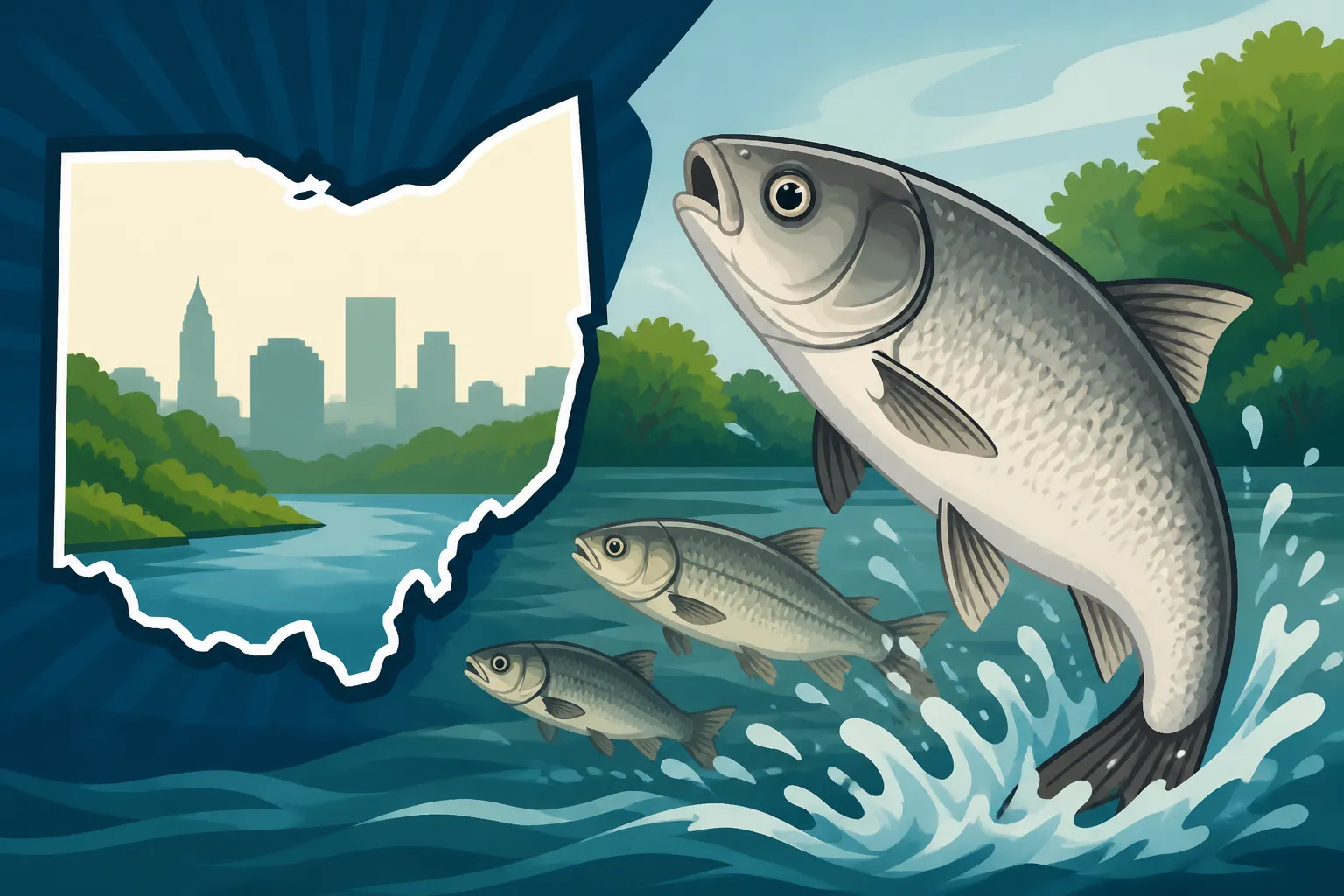
- Silver Carp: Also filter feeders, Silver Carp are infamous for their tendency to leap out of the water when startled by boat motors. This behavior is not only a danger to boaters but also indicative of their dense populations in affected waterways.
- Grass Carp: Unlike their filter-feeding cousins, Grass Carp primarily eat aquatic vegetation. While they are sometimes used for vegetation control, sterile, triploid Grass Carp are the only ones legally allowed for stocking in Ohio with a permit. Wild, fertile Grass Carp, however, can breed and cause significant habitat alteration by consuming beneficial aquatic plants.
- Black Carp: These are snail-eating specialists. Their potential impact is on native mollusk populations, including endangered freshwater mussels, which are crucial for water filtration.
Understanding the differences between these species is really the first step in recognizing the threat. Ohio Invasive Fish Species to Know provides even more detail on these and other unwanted aquatic residents.
Environmental Impact: Why Ohio's Waterways Are at Risk
The primary reason Asian Carp are such a grave concern is their ability to outcompete native species for food and space, leading to a decline in biodiversity and the health of our fisheries. Imagine a thriving ecosystem where small fish eat plankton, and larger fish eat the small fish. Now, introduce a species that eats plankton faster and grows bigger, essentially starving out the foundational food source for many of our beloved sport fish.
In rivers, they can disrupt spawning grounds and alter habitat. In lakes, their sheer numbers can quickly dominate the biomass. For Lake Erie, often called the "Walleye Capital of the World," the prospect of Bighead and Silver Carp consuming the same plankton that juvenile walleye and yellow perch depend on is a terrifying thought. The ripple effect could be devastating, impacting not just fishing, but the entire aquatic food web and the local economies built around it. Our Ohio Walleye Fishing Guide highlights just how important these native species are to our state.
Connecting the Dots: How They Could Reach Ohio
The biggest threat vector for Asian Carp into Ohio waters is through the connected river systems. The Ohio River, which forms the southern border of our state, is already home to established populations of Bighead and Silver Carp in its lower stretches. The concern is that these fish could move upstream, or, even more critically, find a pathway from the Ohio River basin into the Lake Erie basin.
The primary pathway for this connection is through man-made canals and potentially through flood events that temporarily link watersheds. While physical barriers and monitoring efforts are in place, the sheer scale of the waterways makes complete prevention a monumental task. Understanding these potential pathways helps us grasp the vigilance required to protect our state's most valuable fishing resources.
Are They Truly Established? The Current Status in Ohio Waters
This is the million-dollar question for many Ohio anglers: have Asian Carp truly taken hold? It's a complex answer, largely because "established" has a very specific meaning in the world of invasive species management.
The Difference Between Sightings and Established Populations
It's crucial to differentiate between an individual fish being found in Ohio waters and an "established population." A sighting, or even a few individual fish being caught, means they are present, but it doesn't automatically mean they are established. An established population implies a self-sustaining, reproducing group of fish that are successfully breeding and increasing their numbers in a particular waterway.
Think of it this way: if a single dandelion seed blows into your pristine lawn, you have a "sighting." If that seed grows, flowers, and spreads hundreds of new seeds that all sprout, then you have an "established population" of dandelions. For Bighead and Silver Carp, confirmed individual fish have been found in Ohio waters over the years, particularly in the Ohio River, but active, self-sustaining breeding populations in Ohio's portion of the river or in Lake Erie have been largely avoided so far.
Documented Encounters and Where They've Been Found
Over the past two decades, there have been documented instances of individual Bighead and Silver Carp being captured by commercial fishers or researchers in the Ohio River system, and occasionally in tributaries further upstream. These catches serve as stark reminders of the ongoing threat and confirm that the fish are present in the general vicinity.
For example, a Bighead Carp might be caught near Cincinnati or Portsmouth in the main stem of the Ohio River. These instances trigger immediate responses from agencies like the Ohio Department of Natural Resources (ODNR) and their partners, who ramp up monitoring efforts to determine if it was an isolated incident or indicative of a larger movement. While these findings are concerning, the good news is that they haven't yet pointed to widespread, established breeding populations within Ohio's specific stretches of these critical waterways. Our Ohio River Fishing Guide can give you more insight into the diverse fishery of this massive waterway.
Specific Status of Grass Carp vs. Bighead and Silver Carp
This is an important distinction to make, as it's often a source of confusion.
- Grass Carp: Fertile Grass Carp are indeed considered an invasive species, but sterile (triploid) Grass Carp have been legally stocked in private ponds and some public waters in Ohio for many years to control nuisance aquatic vegetation. These sterile fish cannot reproduce, and their presence, while regulated, does not pose the same "established population" threat as fertile Bighead or Silver Carp. If you're fishing a pond and catch a Grass Carp, it's often one of these sterile individuals. However, the presence of fertile Grass Carp is still a concern, and they have been found, usually mixed in with other carp species.
- Bighead and Silver Carp: These are the "headline" Asian Carp species causing the most alarm. While individual fish have been found in the Ohio River basin that borders Ohio, there's currently no evidence of them having established breeding populations within Ohio's internal waters or the Ohio portion of Lake Erie. This isn't to say they aren't a threat, but rather that intense monitoring and preventative measures have, so far, kept true establishment at bay. This table summarizes the general status:
| Asian Carp Species | Primary Threat | Documented in Ohio Waters | Established Breeding Population in Ohio? | Notes |
|---|---|---|---|---|
| Bighead Carp | Filter Feeder | Yes (Ohio River Basin) | No | Individual fish found, but no widespread reproduction confirmed in Ohio. |
| Silver Carp | Filter Feeder | Yes (Ohio River Basin) | No | Individual fish found, but no widespread reproduction confirmed in Ohio; known for jumping. |
| Grass Carp | Plant Eater | Yes (Sterile widespread) | No (Fertile is rare/unconfirmed) | Sterile versions stocked for weed control. Fertile versions are highly undesirable. |
| Black Carp | Snail Eater | Yes (Ohio River Basin) | No | Less frequently encountered, but presence in Ohio River Basin is a concern for mussel populations. |
It’s an ongoing battle, and vigilance is key. Knowing the difference between these species and their specific impacts helps target conservation efforts and angler awareness.
Ohio's Defense Line: Protecting Our Fisheries from Asian Carp
Ohio isn't just sitting by idly hoping these invaders don't establish themselves. There are dedicated agencies, researchers, and management strategies actively working to prevent the widespread establishment of Asian Carp in our waters. These efforts are multifaceted, combining science, technology, and public involvement to form a robust defense.
Monitoring and Control Strategies in Place
The Ohio Department of Natural Resources (ODNR) works closely with federal agencies like the U.S. Fish and Wildlife Service, U.S. Army Corps of Engineers, and neighboring states to implement comprehensive monitoring and control programs. These programs are vital for early detection and rapid response.
- eDNA Sampling: Environmental DNA (eDNA) is a cutting-edge tool that involves taking water samples and testing for microscopic traces of DNA shed by organisms. If Asian Carp eDNA is found, it indicates that the fish are or have recently been present in that area, even if no physical fish are seen. This allows for targeted monitoring and trapping efforts.
- Targeted Fishing and Removal: In areas where Asian Carp are detected, specialized commercial fishing gears and techniques are often employed to try and remove individual fish before they can establish a breeding population. This can include gill nets, seine nets, and electrofishing.
- Barrier Technologies: In critical pathways, such as the Chicago Area Waterway System that connects the Mississippi River basin to Lake Michigan, electric dispersal barriers are in place. While not directly in Ohio, the success of these upstream barriers is crucial for protecting the entire Great Lakes basin, including Lake Erie, from Asian Carp invasion.
- Interstate Collaboration: Ohio is part of a larger network of states and provinces working together on this issue. The threat of Asian Carp transcends state lines, making collaborative efforts absolutely essential for effective management.
These strategies are constantly evolving as new research emerges, showing how seriously the state takes the protection of its Lake Erie Fishing Regulations in Ohio and other vital fishing grounds.
Your Vital Role: Reporting Sightings and Preventing Spread
As an angler, you are truly one of Ohio's most important eyes and ears on the water. You spend countless hours on the rivers, lakes, and streams, and your vigilance can make a real difference in the fight against Asian Carp. If you suspect you've caught an Asian Carp, do not release it back into the water.
Here’s what you should do:
- Do not release the fish. Keep it contained.
- Take clear photographs: Get pictures from several angles, especially showing the head, mouth, and any distinct markings or fin shapes. If it's a Silver Carp, note the placement of the eye relative to the mouth.
- Note the location: Record the precise location where the fish was caught (GPS coordinates are ideal, otherwise descriptive landmarks).
- Contact the ODNR: Immediately call the Ohio Department of Natural Resources at their toll-free tip line or contact a local wildlife officer. Provide them with the information and photos. They will provide instructions on what to do with the fish.
- Prevent spread: Never transport live fish from one body of water to another. This is a common way invasive species are accidentally introduced. Always "Clean, Drain, Dry" your boat, trailer, and fishing gear between trips to different waterways to prevent the spread of fish, plants, and other organisms.
Understanding and following these steps is paramount. The fines for spreading invasive species or fishing without proper licenses can be significant, as detailed in Ohio Wildlife Officer Fishing Violation Fines in Ohio.
Tools and Resources for Ohio Anglers to Help
Being prepared to identify and report a potential Asian Carp sighting is a powerful way to contribute to conservation. There are several resources available to help you become a more informed angler.
- Field Guides: Investing in a good freshwater fish identification guide specific to Ohio or the Great Lakes region can be invaluable. These are readily available from booksellers, including online retailers like Amazon, and can be kept in your tackle box or boat for quick reference.
- Online Resources: The ODNR website and federal agency sites often have detailed identification sheets and reporting forms. Many anglers bookmark these pages on their smartphones for on-the-water access. You can find comprehensive information, including identification photos and descriptions, by searching for "Ohio Asian Carp identification."
- Reporting Apps: Some states and regions offer mobile apps that allow for easy reporting of invasive species sightings directly from your phone. Check the ODNR's official resources for any recommended applications.
- Webinars and Workshops: Keep an eye out for educational opportunities offered by local conservation groups, fishing clubs, or the ODNR. Attending a webinar or workshop can deepen your understanding and connect you with local experts. Many anglers even find specific equipment like heavy-duty landing nets or fish grippers on Amazon to safely handle unfamiliar or large fish for proper identification and documentation.
By being informed, vigilant, and proactive, Ohio's angling community plays a crucial role in safeguarding our fantastic fishing heritage for generations to come. For more detailed rules and guidelines, it’s always a good idea to consult Where to Find the Ohio Fishing Regulations Booklet or its online counterpart.
Disclaimer
This article is for general informational purposes only and does not constitute professional advice. Laws, prices and regulations vary by location and change over time. Consult a qualified professional for guidance on your specific situation.