Casting Techniques for Steelhead
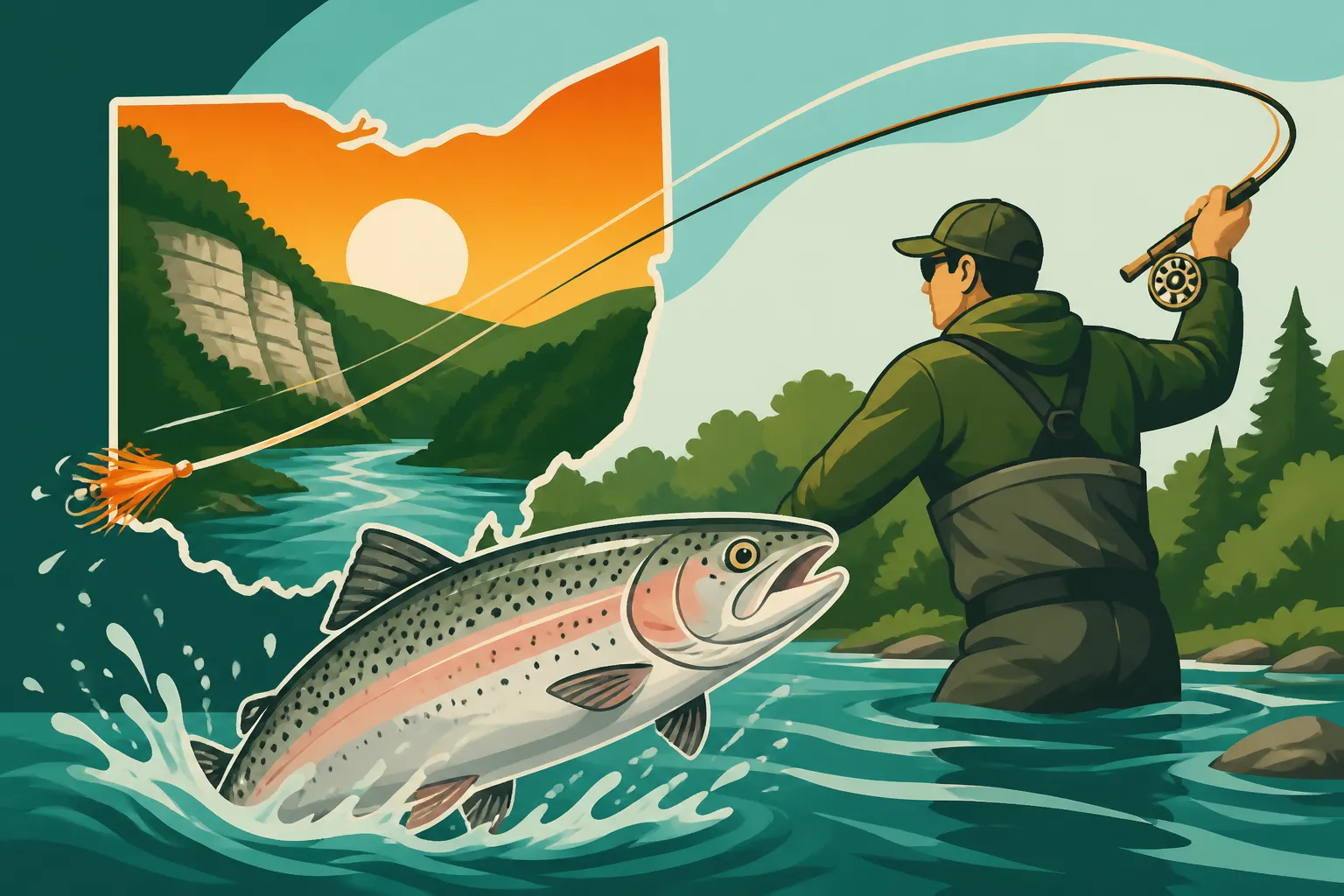
Casting for steelhead in Ohio's rivers can feel like trying to thread a needle in a hurricane, especially for those who are new to the game or just haven't quite dialed in their technique. You've got swift currents, tricky eddies, overhanging branches, and fish that are notoriously finicky – it’s enough to make even seasoned anglers pull their hair out. But don't you worry, because this guide is going to walk you through the essential casting techniques that will give you the confidence and accuracy you need to consistently put your offering in front of those elusive chrome beauties.
Understanding the Ohio Steelhead Environment
Before you even think about swinging a rod, it’s crucial to understand the battlefield you're stepping onto. Ohio’s steelhead fisheries, primarily the tributary streams flowing into Lake Erie, present a unique set of challenges and opportunities. These aren't your typical placid trout streams; they are dynamic, ever-changing waterways that demand respect and a strategic approach.
River Characteristics and Obstacles
Ohio's steelhead rivers, often referred to collectively as "Steelhead Alley," are a diverse bunch. From the relatively wide and meandering Grand River to the tighter, rockier Rocky River or the Chagrin River, each has its own personality. You’ll encounter everything from fast-flowing riffles to deep, slow pools, undercut banks, log jams, and boulder fields. These features are precisely what make them prime steelhead habitat, but they also create formidable casting obstacles.
Imagine standing on the bank of the Vermilion River, trying to reach that perfect seam created by a submerged log. You might have brush behind you, a high bank on the opposite side, and a strong current pushing your line downstream the moment it hits the water. Or perhaps you're wading the Conneaut Creek, needing to cast under a low-hanging tree limb to hit a dark, promising hole. These are the real-world scenarios that humble even the best anglers. Understanding these dynamics is the first step to choosing the right cast. It’s not just about distance; it’s about placement and stealth. The clearer the water, the more critical a subtle presentation becomes.
Steelhead Behavior and Holding Lies
Steelhead are incredible athletes, migrating from Lake Erie into these rivers to spawn. When they're in the rivers, they aren't always actively feeding in the same way a resident trout might be. They often hold in specific "lies" where they feel safe from predators and can conserve energy while still being able to dart out for an opportunistic meal. These holding lies are typically areas of reduced current, often near deeper water, structure, or current breaks.
You'll find them behind large rocks, in the slower water of an eddy, tucked under an undercut bank, or holding at the head or tail of a deep pool. Knowing How to Read Steelhead Holding Water is paramount. A perfectly executed cast that lands your bait just upstream of one of these lies, allowing it to drift naturally into their strike zone, is often the difference between success and frustration. They are incredibly wary fish, and a splashy, inaccurate cast can send them scattering, making that spot unproductive for a while. Your goal is to present your offering as naturally and subtly as possible, making it irresistible rather than alarming.
Essential Gear for Steelhead Casting
Having the right tools for the job is non-negotiable when it comes to effective steelhead casting. The gear you choose will directly impact your ability to execute various casting techniques and present your bait correctly. It's not just about brand names; it's about matching your equipment to the specific conditions you'll face on Ohio's steelhead rivers.
Rod and Reel Selection for Different Casting Styles
For steelhead, your rod and reel are an extension of your arm, dictating how accurately and delicately you can present your offerings. Generally, a longer rod is preferred for steelhead fishing in Ohio, typically ranging from 8'6" to 10'6". This extra length provides several advantages: it aids in casting lighter baits, helps manage line on the water (especially crucial for mending in current), and offers better leverage when fighting a powerful fish.
Spinning rods are incredibly popular for their versatility in casting various baits. A medium-light to medium power rod with a fast action tip is a common choice, allowing for sensitive bite detection and enough backbone to handle a strong steelhead. For reels, a 2500-4000 series spinning reel with a smooth drag system is ideal. Brands like Shimano, Daiwa, and Pflueger offer excellent options. For those who prefer baitcasting, especially for throwing heavier spoons or spinners, a medium to medium-heavy power rod, around 7' to 8'6", paired with a reliable low-profile baitcasting reel can be very effective. This setup gives incredible accuracy for pinpoint presentations. When selecting a new rod or reel, checking reviews on platforms like Amazon can give you a good idea of their performance in real-world fishing scenarios.
Line Choices and Leader Setups
The right line is your critical connection to the fish, and for steelhead, it’s a careful balance between strength, sensitivity, and stealth. Most anglers opt for a main line of 8-10 pound test monofilament or fluorocarbon, or sometimes 15-20 pound braided line. Braided line offers superior sensitivity and casting distance, but it's crucial to tie a fluorocarbon leader to it. Fluorocarbon is less visible underwater and has excellent abrasion resistance, which is vital when fishing around rocks and logs.
A common leader setup involves a main line tied to a small swivel (barrel or micro-swivel), followed by a section of 6-8 pound fluorocarbon leader material, often 3-5 feet long. If you're using very light presentations, like small trout beads or tiny jigs, you might even drop down to a 4-pound test fluorocarbon tippet off a slightly heavier leader. The goal is to present your bait as naturally as possible without hindering its action or spooking the fish. Knowing Best Line Weight for Ohio Steelhead Fishing can dramatically improve your hook-up ratio and prevent break-offs.
Lures and Baits Tailored for Casting
The world of steelhead baits is vast, but when it comes to casting, certain types rise to the top. Spinners and spoons are classic choices, designed to flash and wobble as they retrieve, mimicking injured baitfish. Colors like silver, gold, chartreuse, and orange are perennial favorites. Brands like Little Cleo, Rooster Tail, and Mepps are staples in many steelhead anglers' tackle boxes. These are often best fished by casting across or slightly upstream and retrieving just fast enough to make them work without getting hung up on the bottom.
Soft plastics, such as trout beads, small worms, or egg imitations, are incredibly effective, especially when dead-drifted. These require a very subtle cast and presentation, often paired with minimal weight (split shot or small pencil weights) to get them down to the strike zone. Jigs, tipped with a waxworm, maggot, or soft plastic, also shine in this category. For fly anglers, understanding Best Fly Patterns for Ohio Steelhead is key. The versatility of casting allows you to adapt to whatever the steelhead are keying in on, whether it's an aggressive reaction strike or a delicate nymph presentation.
Fundamental Casting Techniques for Ohio Steelhead
Mastering a variety of casting techniques is like having a full toolbox – you’ll be able to tackle any situation the river throws at you. Each cast serves a different purpose, whether it’s to achieve distance, precision, or to navigate around obstacles.
The Roll Cast and Its Applications
The roll cast is an indispensable technique for steelhead anglers, especially when space is limited behind you. We've all been there: a perfect steelhead lie just across the current, but dense brush or trees directly behind you make an overhead cast impossible. This is where the roll cast shines. Instead of needing back-casting room, the roll cast uses the weight of the line and lure to create a forward momentum.
To execute a roll cast, start by letting your line and lure hang downstream from your rod tip. Bring your rod tip up and back slightly, creating a "D" loop of line behind your rod (imagine the line forming the shape of a capital 'D' on the water's surface). Without a distinct pause, smoothly and powerfully sweep the rod forward, driving the line and lure across the water. The key is to keep the line moving continuously. This cast is fantastic for close-quarters fishing, getting your offering into tight seams, and delivering a gentle presentation that won't spook wary fish. It’s also excellent for quickly repositioning your bait without having to reel in and recast.
Overhead Casting for Distance and Accuracy
The overhead cast is likely the first cast most anglers learn, and for good reason: it’s effective for achieving distance and can be surprisingly accurate with practice. When you have open space behind you, this is often your go-to for covering wider stretches of river or reaching those far-off pockets where steelhead might be holding.
For a good overhead cast, think of your rod as a clock face. Start with your rod tip pointed towards your target. Bring the rod smoothly back to about the 10 or 11 o'clock position (past vertical, but not too far). This loads the rod with energy. Pause briefly, allowing the line to fully extend behind you. Then, snap the rod forward to the 1 or 2 o'clock position, aiming directly at your target. The forward motion should be powerful but controlled. The key is the smooth acceleration and crisp stop, which propels your lure forward. Practice is crucial here; consistent timing and a controlled power stroke will improve both your distance and your accuracy dramatically, which is essential when trying to hit that small seam amidst a large expanse of water.
Sidearm and Underhand Casting for Tight Spots
When the overhead cast is out of the question due to overhanging branches or bankside vegetation, sidearm and underhand casts come to the rescue. These casts keep your lure and line low to the water, allowing you to sneak your presentation into tight windows.
A sidearm cast is essentially an overhead cast performed horizontally. You bring your rod back parallel to the water, then sweep it forward, releasing the line when your rod tip is aimed at your target. This is perfect for casting under low branches or into windy conditions where an overhead cast would catch too much air and go off course. The action is similar to skipping a stone across the water. The underhand cast, on the other hand, is a more vertical, upward sweep that keeps the lure very low to the water during its forward trajectory. You initiate it by dropping your rod tip down, perhaps almost touching the water, then sweeping it upwards and forwards in a smooth motion. This is particularly useful for delivering a lure into pockets directly in front of you without spooking fish with a high-flying lure. Both these casts require a bit of finesse and practice to get right, but they open up a whole new world of fishing opportunities in congested areas.
Advanced Casting Strategies for Challenging Conditions
Once you've got the basic casts down, it's time to refine your technique to truly conquer Ohio's steelhead rivers. These advanced strategies focus on how you manage your line, interpret the water, and adapt to the constantly changing environment.
Mending Line and Managing Drift
One of the most critical skills for effective steelhead fishing, especially with lighter baits and lures, is line mending. Mending refers to the act of lifting a section of your fishing line off the water and repositioning it upstream (or downstream) to control the drift of your bait. Why is this so important? Because river currents are rarely uniform. You might have a fast current on the surface and a slower current near the bottom, or vice versa, creating drag on your line. This drag pulls your bait unnaturally, signaling "fake" to a wary steelhead.
A good mend ensures your lure or bait drifts at the same speed as the current directly around it – a truly "natural" drift. To mend, once your cast lands, observe your line. If you see it bowing in the current, indicating drag, quickly lift your rod tip high and flip the belly of the line upstream without moving your bait. This creates slack and allows your bait to continue its natural drift. Conversely, sometimes you might need a downstream mend to speed up your presentation. The better you get at mending, the longer and more effective your drifts will be, increasing your chances of a hook-up. Effective line management, often aided by longer rods and judicious use of your reel, means you stay connected to your bait without hindering its presentation.
Reading Water and Pinpoint Presentation
We touched on understanding steelhead holding lies earlier, but true mastery comes from the ability to read the water and make pinpoint presentations to those exact spots. This means more than just casting near a log; it means casting precisely to the upstream side of the log, allowing your bait to tumble naturally into the pocket behind it. It means understanding how current flows around boulders, creating small seams and eddies that are prime targets.
When you're faced with a new section of river, take a moment to observe. Look for changes in current speed, depth, and structure. Where would you, if you were a steelhead, feel comfortable and have access to food? Often, these spots are surprisingly small. Your casting accuracy needs to be dialed in for this. Sometimes, it’s not about how far you can cast, but how accurately you can place a lure into a coffee-cup sized eddy from 20 feet away. Best Time to Fish for Steelhead After Rain often involves stained water, where pinpoint presentation becomes even more critical as fish rely more on scent and feel than sight. Mastering the art of reading the water and then delivering a precise, quiet cast is a hallmark of a truly successful steelhead angler.
Adapting to Wind and Current
Ohio weather, particularly near Lake Erie, is notorious for its unpredictability. One moment it's calm, the next, a stiff breeze is whipping upriver, making casting a nightmare. Strong currents, even without wind, can also wreak havoc on your line and presentation. Adapting to these elements is crucial.
When facing a headwind, a powerful, low sidearm cast can cut through the air better than a high overhead cast. You might also need to use slightly heavier lures to maintain control. With a tailwind, you can often achieve impressive distances, but be careful not to overpower the cast, which can lead to tangles. Crosswinds are perhaps the trickiest, as they can cause your line to bow uncontrollably. Here, you'll rely heavily on quick, precise mends immediately after your lure hits the water. Similarly, strong river currents require more aggressive mending and careful line management to avoid unnatural drag. Sometimes, changing your casting angle, moving upstream or downstream along the bank, can help you find a more favorable approach to combat the wind or current. Always be ready to adjust your stance, your cast, and your line management strategy to the conditions at hand.
Common Casting Mistakes and How to Fix Them
Even the most experienced anglers make casting mistakes, especially when conditions are tough or frustration sets in. Identifying and correcting these common errors will significantly improve your steelhead game. Don't beat yourself up; every cast is a learning opportunity.
Overpowering the Cast and Snagging
One of the most frequent mistakes, particularly when trying to reach distant spots or when feeling rushed, is overpowering the cast. This isn't just about wasting energy; it often leads to a lack of accuracy, a splashy entry of your lure into the water, and most frustratingly, snags. A powerful but uncontrolled cast sends your lure flying wildly, often into trees, bushes, or directly into underwater structure. When you're trying to cast a spoon, for example, an overpowered cast can cause it to helicopter in the air rather than fly straight, leading to terrible accuracy.
The fix? Slow down. Focus on smooth acceleration rather than brute force. Think of your rod as a spring, loading and unloading energy. Let the rod do the work. Practice your casting in an open field to build muscle memory without the pressure of fishing. Pay attention to your rod tip throughout the cast – it should follow a relatively straight line, not loop wildly. This will ensure your lure travels efficiently. When learning How to Cast a Spoon for Steelhead, many beginners tend to overdo it, resulting in less effective presentations. Remember, it's about finesse and control, not just raw power.
Lack of Accuracy and Presentation Issues
There’s nothing more disheartening than seeing that perfect steelhead lie and repeatedly casting just short, or worse, overshooting it. Lack of accuracy is a common struggle, and it directly impacts your ability to present your bait naturally. A lure that lands too far from the target might not get seen, while one that lands too close or with a splash can spook the fish.
Improving accuracy starts with proper targeting. Pick a specific leaf, rock, or bubble on the water as your aim point, rather than a general area. Keep your eye on that spot throughout your cast. Practice casting to targets on land (like a hula hoop or a bucket) to develop your aiming skills. Your rod tip should be pointing directly at your target at the end of your forward cast. Another common issue is how the bait lands. A noisy splash from a heavy lure can send fish running. Try to "feather" your line with your non-dominant hand as the lure approaches the water, slowing its descent for a softer entry. This is especially important when using lighter presentations like trout beads or jigs, where a delicate landing is paramount.
Dealing with Line Tangles and Backlashes
Ah, the dreaded bird’s nest, or as baitcaster users know it, the backlash. Tangles and backlashes are inevitable, but they can be minimized and resolved more quickly with the right approach. They are often a result of poor casting mechanics, incorrect reel settings, or rushing.
For spinning reels, line twist is a common culprit, often caused by improperly spooled line or by lures that spin excessively. To prevent this, always ensure your line is spooled correctly (using a friend to hold the spool with a pencil is a good trick). Avoid overfilling your spool, as this can cause coils to jump off. If you suspect line twist, let out a lot of line behind a boat or in a current without any tackle attached, allowing the line to untwist. For baitcasting reels, backlashes occur when the spool spins faster than the line is pulling off, causing a mess of loops. The key to preventing this is proper reel adjustment (setting your spool tension and magnetic/centrifugal brakes correctly for the weight of your lure) and a smooth, controlled casting motion. Thumb control is also vital – apply light pressure to the spool with your thumb as the lure flies, especially as it slows down, to prevent overrun. While frustrating, a tangle is a perfect moment to pause, breathe, and meticulously work it out, rather than making it worse by pulling impatiently. You might even find a specific anti-backlash spray on Amazon that can help, though technique is always primary.
Disclaimer
The information provided in this guide is for general informational purposes only and is not intended as legal advice regarding fishing regulations. Fishing rules, bag limits, and seasons in Ohio can change. Always consult the latest official regulations from the Ohio Department of Natural Resources (ODNR) before heading out on the water. Following all state and local laws is your responsibility.