How to Fish a Drop Shot for Smallmouth Bass
You can see the smallmouth on your graph, hugging a rock hump in twenty-five feet of water off Kelleys Island, and every crankbait and tube you throw comes back untouched. That is the exact moment a drop shot earns its reputation. This guide explains how to rig, where to use and how to work a drop shot so those stubborn Ohio bronzebacks finally commit.
What a Drop Shot Is and Why Smallmouth Fall for It
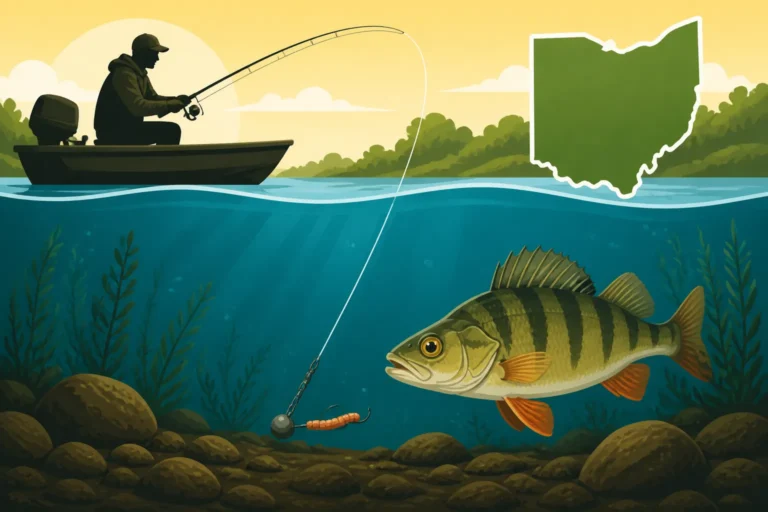
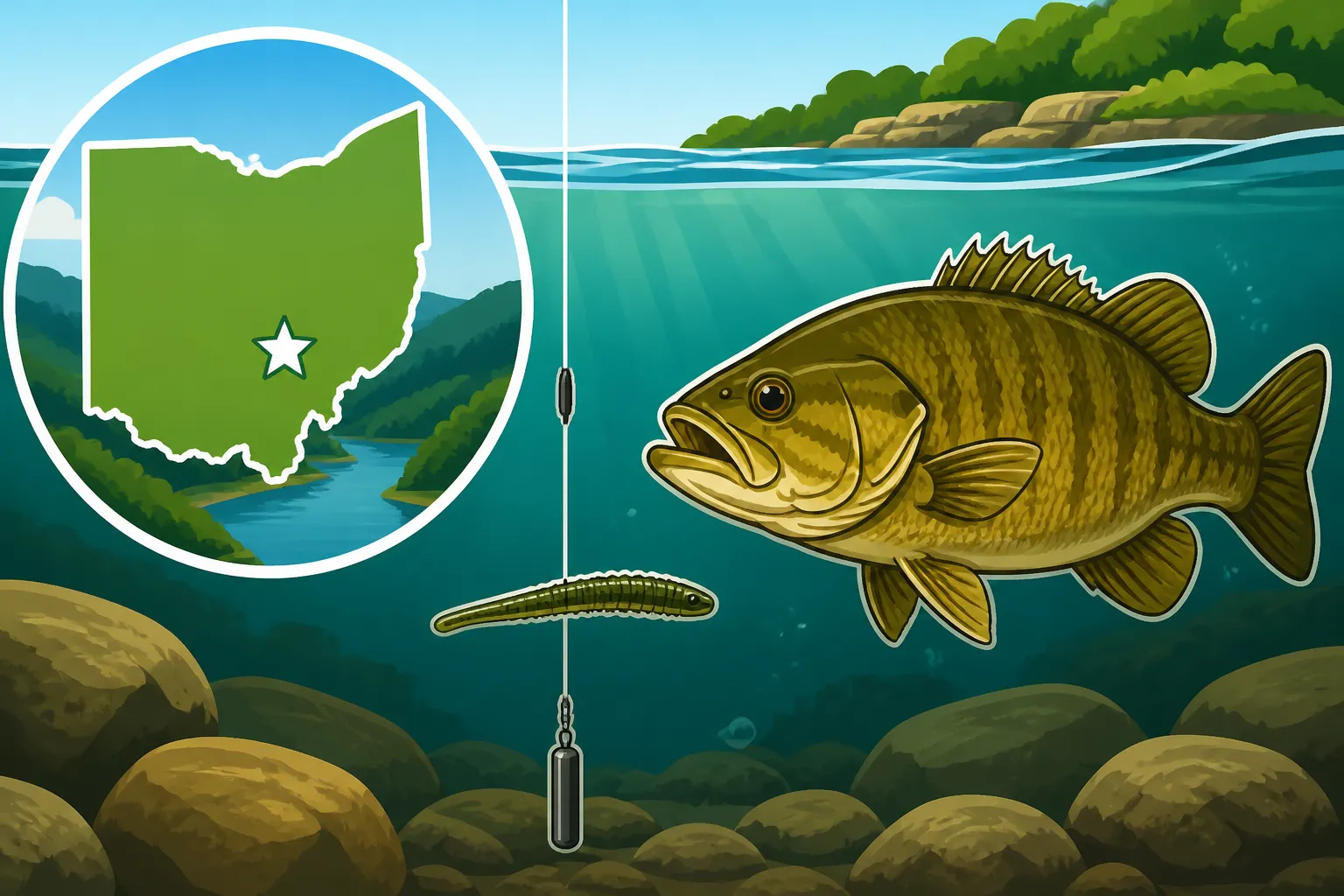
A drop shot is a finesse rig that flips the usual setup upside down. Instead of the weight sitting at the hook, the weight sits at the very end of the line and the hook is tied above it, usually somewhere between six inches and two feet up. The weight holds bottom while the bait hovers in the strike zone, right where a smallmouth is looking.
That hovering is the whole point. Smallmouth bass are curious and opportunistic, but on a bright, calm day or after a cold front they often refuse anything that moves fast. A drop shot lets you keep a small, natural bait in front of them for as long as it takes, with only the tiniest shakes of the rod tip to make it quiver. To a bass, it looks like a goby or a minnow loitering just off the rocks, which is exactly what they eat.
In Ohio, the rig shines in two very different places. On Lake Erie, smallmouth relate to rock humps, reefs and shoals around the islands and along the shoreline from Toledo to Conneaut, often in fairly deep, clear water. On inland lakes and reservoirs, smallmouth tend to hold on rocky points, riprap, channel swings and deeper drop-offs. The drop shot works in both settings because it puts the bait at a controlled depth regardless of the bottom. If you want more background on where these fish live, see Smallmouth Bass Habitat Preferences.
When a Drop Shot Beats Other Finesse Rigs
A Ned rig, tube or football jig drags along the bottom, and that can be deadly. But when fish are suspended a foot or two off the rocks, or when the bottom is full of snags, a drop shot keeps the bait clean and visible. Our guide on How to Fish a Ned Rig for Ohio Smallmouth Bass covers the bottom-dragging side of finesse fishing. Many good anglers carry both rigs and switch depending on where the fish sit in the water column.
Rigging a Drop Shot Step by Step
Rigging takes a minute once you have done it a few times. Here is the standard approach.
- Pull out about three feet of line from your rod tip, more than you think you need.
- Pass the line through the eye of a small drop shot hook, usually a size 1 or 2, from the point side.
- Tie a Palomar knot, leaving a long tag end below the hook, roughly the length you want between hook and weight plus a few inches.
- Before snugging the knot fully, pass the tag end back through the hook eye from the top. This makes the hook point stand up and out from the line.
- Clip a drop shot weight onto the tag end at your chosen distance below the hook. Most drop shot weights pinch the line, so you can adjust height without retying.
- Nose-hook a small soft plastic through the very tip of the head, or wacky-rig it through the middle for more action.
If knots are not your strong suit, our guide on Ohio Fishing Knots to Know walks through the Palomar and a few backups.
Choosing Line and Leader
Line choice makes a real difference. Most Ohio anglers fishing deep, clear Lake Erie water use a light braid main line in the 10 to 15 pound range, tied to a fluorocarbon leader of 6 to 10 pounds. The braid gives you sensitivity and long casts, while the fluorocarbon is harder for wary bass to see and resists abrasion on rocks. On smaller inland lakes, straight fluorocarbon works fine. For a broader look at line types, read Choosing the Right Ohio Fishing Line.
Hooks, Weights and Baits
The table below covers the common choices.
| Component | Typical Choice | Why It Works for Ohio Smallmouth |
|---|---|---|
| Hook | Size 1 or 2 drop shot or light wire finesse hook | Small profile, sharp, good hook penetration on light line |
| Weight | 1/4 oz to 1/2 oz cylinder or teardrop | Lighter for shallow inland points, heavier for deep Lake Erie reefs and wind |
| Leader length to weight | 6 to 18 inches | Short for fish on the bottom, longer for suspended fish |
| Bait | 3 to 4 inch minnow, worm or goby-style plastic | Matches gobies, shiners and young perch |
| Colors | Green pumpkin, smoke, goby brown, pearl | Natural tones in clear water, slightly brighter in stained water |
Baits, weights and hooks are easy to find at Ohio tackle shops near the lake, and Amazon is a practical way to pick up multi-packs of drop shot weights and finesse hooks before the season, since you will lose some to the rocks. Buying hooks in bulk on Amazon also means you are never tempted to keep fishing a dull one.
How to Work the Drop Shot in Ohio Waters
Here is where most people go wrong. The drop shot is not a lure you cast and crank. It is a vertical or near-vertical presentation that relies on patience.
Vertical Fishing Over Deep Rock
On Lake Erie, many anglers position the boat directly over a school they see on the sonar, then drop the rig straight down. Once the weight touches bottom, reel up the slack so the line is tight but the weight still rests on the rocks. Then gently shake the rod tip, moving the line rather than the weight. The bait should quiver in place. Pause often. Strikes frequently come during the pause.
Watching your electronics helps. A good fish finder shows the rig and the fish, and you can see a bass rise to inspect the bait. For tips on reading the screen, see Reading Ohio Fish Finders and Electronics.
Casting and Dragging on Inland Lakes
On inland reservoirs, smallmouth on points and riprap are easier to reach with a cast. Throw the drop shot past the target, let it settle, then slowly drag it a foot or two at a time with the rod tip. Pause between drags and shake gently. The weight bumps along the rocks while the bait hovers. This approach also works well from shore along rocky banks and dams.
Setting the Hook
Drop shot bites often feel like a slight weight or a soft tick. Because the hook is small and the line is light, you do not need a huge hookset. Reel down to feel the fish, then sweep the rod firmly to the side. Many anglers use a medium-light spinning rod with a fast tip to absorb runs from a strong fish on light line. Set your drag lighter than you would for a baitcaster, because a big Lake Erie smallmouth will take line near the boat.
Common Drop Shot Mistakes
Most missed fish and empty days on a drop shot come from a handful of habits that are easy to fix once you notice them.
- Shaking too hard. If the weight is hopping off the bottom, you are moving the rig too much. The goal is a bait that shivers in place, not one that jumps around.
- Fishing with slack line. A bow in the line hides bites. Keep just enough tension to feel the weight without dragging it.
- Setting the leader too long for the conditions. When smallmouth are glued to the rocks, an eighteen-inch leader holds the bait above them. Shorten it until the bait sits just off the bottom.
- Using a weight that is too light in wind. On a breezy Lake Erie day, a quarter-ounce weight drifts away from the fish. Go heavier so the rig stays under the boat.
- Leaving a torn bait on the hook. A plastic that has slid down the hook or split at the nose spins and looks wrong. Replace it.
- Giving up on a school too soon. If you can see fish on the graph and they keep looking, try a different color or a smaller bait before leaving.
A good test for your rod work is to shake the rig next to the boat in clear water and watch it. If the bait quivers while the weight stays still, you have the motion right.
When and Where Drop Shotting Pays Off in Ohio
Timing matters as much as technique.
Seasonal Patterns
In spring, smallmouth move toward shallower rock and spawning areas, and drop shots work on the edges of those zones. In summer, the rig becomes one of the best ways to target fish holding deep on Lake Erie reefs and humps. In fall, smallmouth feed heavily before winter, and drop shots remain strong around deep structure. Our guides on Best Techniques for Ohio Smallmouth Bass and Does Lake Erie Have Good Smallmouth Bass Fishing? fill in the seasonal picture.
Weather and Wind
A light chop on Lake Erie is helpful because it breaks up the surface and keeps fish active. Heavy wind makes vertical fishing hard, and that is when you step up to a heavier weight or switch to a different presentation. After a cold front, a drop shot is often the best way to coax bites out of fish that have shut down.
Regulations and Handling
Before keeping any fish, check Ohio Largemouth and Smallmouth Bass Limits. Lake Erie has its own seasonal rules for bass, including periods when fish must be released, so read the current regulations each year. Handle smallmouth gently, especially fish pulled from deep water, and release them quickly to protect the resource.
Disclaimer
This article is for general informational purposes only and does not constitute professional advice. Laws, prices and regulations vary by location and change over time. Consult a qualified professional for guidance on your specific situation.