How Big Smallmouth Bass Get on Lake Erie
Oh, Lake Erie smallmouth bass! If you've spent any time casting a line into her magnificent waters, you know the thrill of connecting with these hard-fighting bronze beauties. But there's always that question buzzing in the back of every angler's mind: just how big do they really get? We've all seen those jaw-dropping photos online, but what's a realistic expectation for the average weekend warrior, and what does it take to truly tangle with a Lake Erie giant? This guide is going to peel back the layers of myth and give you a realistic, in-depth look at the size potential of smallmouth bass in Ohio's crown jewel, Lake Erie.
Lake Erie: A Smallmouth Bass Paradise
Lake Erie isn't just a big body of water; it's a dynamic, rich ecosystem that provides an absolutely perfect environment for smallmouth bass to not only survive but to truly thrive and grow to impressive sizes. It’s no wonder so many anglers flock to its shores and launch their boats, specifically dreaming of those big smallmouth battles. If you've ever wondered why the smallmouth here seem to have an extra kick, it all comes down to their surroundings.
The Rich Ecosystem Fuelling Growth
One of the biggest reasons Lake Erie's smallmouth bass get so large is the sheer abundance and quality of their food source. Imagine a buffet line that never ends – that's essentially what these bass have access to. The clear, cool waters of Lake Erie are teeming with various prey items, and one stands out above the rest: the round goby. Now, I know what you're thinking, "Aren't gobies an invasive species?" And yes, they are. But the truth is, smallmouth bass have adapted remarkably well to this new food source, and gobies have become a primary, protein-packed meal for them. Gobies are relatively easy for bass to catch, are abundant in the rocky areas where smallmouth live, and provide significant nutritional value, allowing the bass to pack on pounds rapidly.
Beyond gobies, Lake Erie smallmouth also feast on emerald shiners, shad, crayfish, and even smaller yellow perch when the opportunity arises. This diverse and plentiful diet means the bass aren't struggling for food, reducing competition for resources and enabling them to put all that energy into growth. It's like a high-protein diet for fish, and it shows in their size and fighting spirit. This incredible food web is a key factor in why you'll often hear Lake Erie described as a premier destination in any Ohio Smallmouth Bass Fishing Guide.
Prime Underwater Real Estate
Another crucial element contributing to the size of Lake Erie's smallmouth bass is the vast amount of ideal habitat available to them. Unlike some smaller, shallower inland lakes, Lake Erie offers an incredible variety of underwater structures that smallmouth absolutely adore. We're talking about extensive rocky shoals, massive rock piles, gravel beds, steep drop-offs, and clear, oxygen-rich waters. Smallmouth bass are not fans of soft, muddy bottoms; they prefer hard structure where they can ambush prey and find cover. Lake Erie delivers this in spades, particularly in its central and western basins.
Consider the deep ledges and rock formations around the Lake Erie islands, like Kelleys Island and South Bass Island. These areas provide perfect ambush points and hiding spots for bass, allowing them to conserve energy and ambush unsuspecting prey. The sheer scale of these habitats means there's less territorial pressure among the bass, giving them more room to roam, feed, and grow without undue stress. The water clarity in many parts of Lake Erie also plays a role, as smallmouth are sight feeders, and clear water allows them to spot their prey more effectively. If you're curious about where these fish prefer to hang out, checking out Smallmouth Bass Habitat Preferences can give you an even deeper understanding of their preferred underwater real estate.
What to Expect: Average and Trophy Smallmouth Sizes
So, let's get down to the brass tacks: what kind of smallmouth bass can you realistically expect to catch on Lake Erie? And what does it take to truly hook into one of those legendary lunkers that make fishing reports sing? The truth is, Lake Erie offers anglers a fantastic chance at both, but understanding the difference between an "average" day and a "trophy" day can help manage expectations and fuel your fishing ambitions.
The "Everyday" Catch
For most anglers heading out onto Lake Erie, a "good" day of smallmouth fishing often involves catching fish in the 15-to-19-inch range. These are robust, healthy fish that put up an incredible fight and are truly a blast to reel in. Many of these fish will weigh between 2 and 3.5 pounds, and landing a handful of them will leave your arms feeling pleasantly tired. It's not uncommon to catch several fish in this size class during a productive outing, especially during peak seasons. These fish represent the strong population of smallmouth that call Lake Erie home, and they are a testament to the lake's rich resources.
When you're out there, whether you're casting from a boat or hitting a prime shore fishing spot, these are the smallmouth that will consistently bite and provide plenty of action. They're strong, vibrant, and always ready for a fight, making them a fantastic target for anglers of all skill levels. Don't underestimate the joy of a 17-inch smallmouth; they truly battle like fish twice their size!
The Pursuit of a Lake Erie Lunker
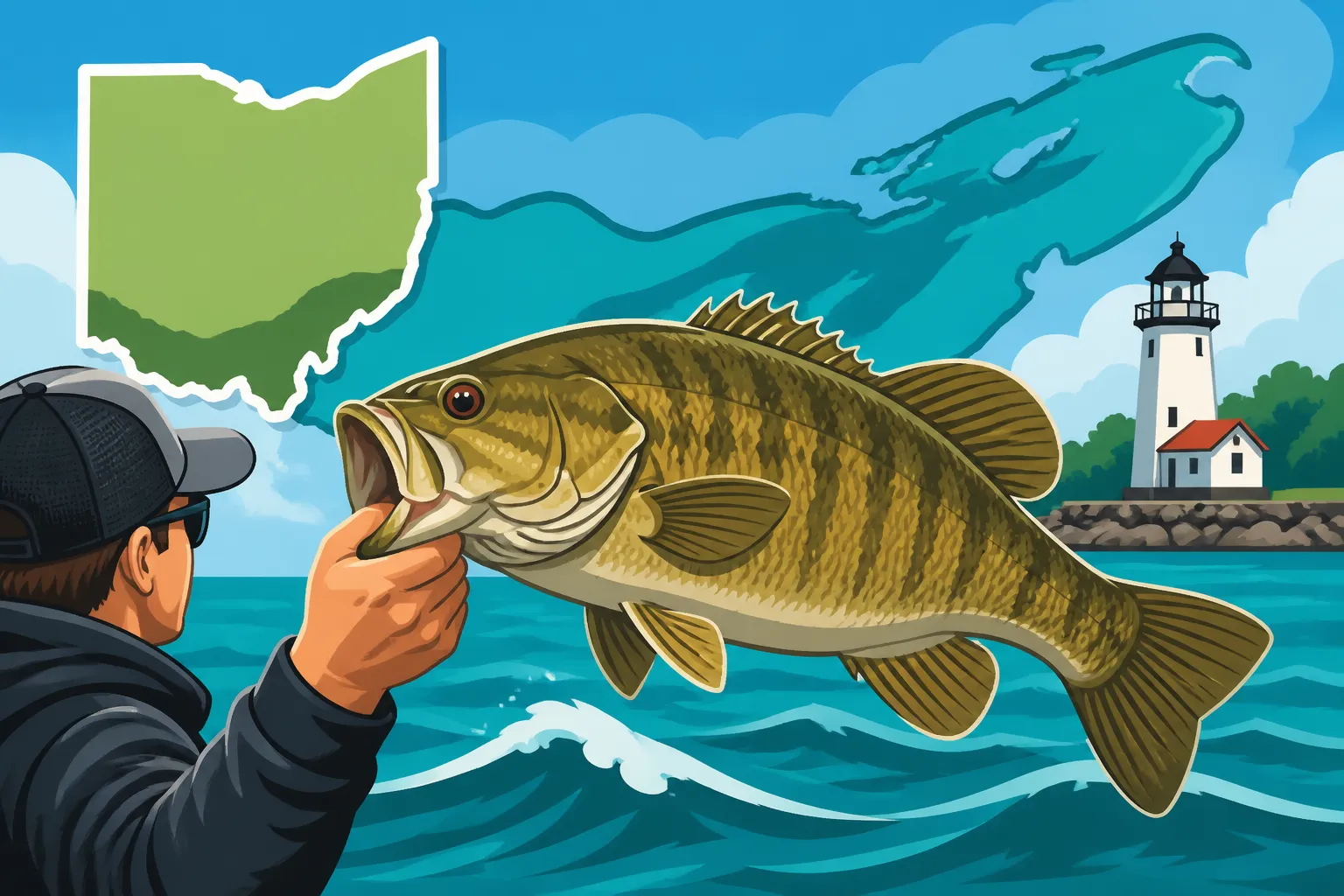
Now, for those looking for something truly special, Lake Erie absolutely has the potential to produce genuine trophy smallmouth bass. When we talk about a "lunker" or a "giant" on Lake Erie, we're typically looking at fish that are 20 inches or longer, often pushing the 21 to 23-inch mark. These fish usually weigh in the 4-to-6-pound range, and sometimes even heavier. It's those truly exceptional fish, those once-in-a-lifetime catches, that can nudge past 6 pounds, even approaching 7 or 8 pounds. While rare, the potential is definitely there.
These larger smallmouth are older, wiser, and often require a bit more strategy and patience to locate and entice. They've survived countless seasons, learned to evade predators and anglers alike, and have had years to gorge on Lake Erie's abundant forage. Landing a 5-pound-plus smallmouth from Lake Erie is an accomplishment to brag about, and it's certainly what draws many serious bass anglers to these waters. It's also worth noting that the Ohio State Record Smallmouth Bass Weight is a truly impressive figure, a testament to the lake's capability to grow absolute giants. The sheer size potential is one of the main reasons many believe Does Lake Erie Have Good Smallmouth Bass Fishing? is an understatement!
Here’s a quick overview of what to expect:
| Category | Length Range (Inches) | Weight Range (Pounds) | Age (Years) |
|---|---|---|---|
| Typical Catch | 15 – 19 | 2 – 3.5 | 3 – 6 |
| Good Catch | 19 – 21 | 3.5 – 5 | 5 – 8 |
| Trophy Lunker | 21+ | 5+ | 7 – 10+ |
The Science Behind the Size: Factors at Play
Understanding the sheer potential for smallmouth bass growth in Lake Erie is one thing, but knowing why they reach such impressive sizes involves looking at several key factors. It’s a fascinating blend of biology, environment, and even a bit of angler influence. It's not just luck when you hook a big one; there's a whole lot going on beneath the surface.
Age, Genetics, and Metabolism
Just like people, fish grow at different rates based on a combination of factors. Age is, of course, a primary determinant of size; older fish have simply had more time to grow. A smallmouth bass caught in the 15-inch range might be 3-4 years old, while a true lunker of 21 inches or more could easily be 7-10 years old, or even older. Their growth isn't linear, often slowing down after they reach sexual maturity, but a healthy fish in a rich environment will continue to add mass throughout its life.
Genetics also play a role. Some individual bass may simply be predisposed to grow larger and faster than others, inheriting traits that give them an edge in foraging efficiency or survival. Metabolic rates also vary; a fish with a higher metabolism might need to eat more, but it might also process food more efficiently, leading to faster growth. Lake Erie’s generally cooler, well-oxygenated waters can also contribute to a healthy metabolism that supports sustained growth over many years.
Forage Availability and Competition
We touched on the incredible diet of Lake Erie smallmouth, and it truly cannot be overstated how vital consistent, high-quality forage is for growing large fish. If a fish has to expend too much energy chasing down scarce food, it won't have the excess calories to put into growth. The abundance of gobies, shiners, and crayfish means that Lake Erie smallmouth can often find a meal without burning too many precious calories, allowing them to dedicate more energy to increasing their size.
Conversely, if the smallmouth population were to explode without a corresponding increase in forage, you'd likely see more smaller, stunted fish due to intense competition. Thankfully, the balance in Lake Erie appears to be healthy, supporting a robust population of both average-sized and trophy-class smallmouth. If you're really interested in what fuels these giants, you can read more in-depth about Smallmouth Bass Diet in Ohio Lakes or specifically What Smallmouth Bass Eat in Ohio Lakes. The more you understand their food, the better you can predict where the bigger fish might be hiding.
Environmental Influence
The overall health of Lake Erie's ecosystem directly impacts the well-being and growth of its smallmouth bass. Water quality is paramount; clean, unpolluted water ensures a healthy food chain and reduces stress on the fish. While Lake Erie has faced environmental challenges in the past, ongoing conservation efforts and regulations have helped maintain a relatively healthy environment for its fish populations.
Water temperature is another key factor. Smallmouth bass prefer cooler water, generally thriving in temperatures between 65-72 degrees Fahrenheit. Lake Erie, particularly its deeper sections and areas influenced by currents, often provides these ideal temperatures for extended periods during the fishing season. Stable water levels, minimal disruptive events like severe pollution spills, and a healthy balance of aquatic vegetation (even if sparse in smallmouth zones) all contribute to an environment where smallmouth can grow big and strong.
Strategies for Landing Larger Lake Erie Smallmouth
Catching any smallmouth on Lake Erie is a blast, but if you're specifically targeting those bigger, bulkier fish, you'll want to employ some specialized strategies. It's often about thinking like a big fish and presenting offerings they can't resist. Trust me, these giants didn't get big by being easy to fool!
Mastering Techniques for Big Bass
When it comes to tempting bigger smallmouth, presentation matters. These older, wiser fish have seen a lot of lures, so subtle and realistic approaches often pay off. One of the most effective techniques is fishing slowly and deliberately with soft plastics. Think about throwing a Ned Rig – that small, mushroom-shaped jig head paired with a small, buoyant worm. It stands straight up on the bottom, mimicking a feeding goby or crayfish, and big smallmouth can't resist it. Learning How to Fish a Ned Rig for Ohio Smallmouth Bass can seriously up your game.
Another killer technique, especially when fish are suspended or holding on deep structure, is a drop shot rig. This allows you to present a small, realistic bait at a specific depth, directly in the face of a hesitant bass, without weighing down the bait itself. It's incredibly versatile and effective for big smallmouth. Dive into How to Fish a Drop Shot for Smallmouth Bass for detailed instructions. Beyond these, tube baits, jerkbaits, and even larger swimbaits can be incredibly effective, particularly when retrieved to imitate a wounded baitfish or goby. The key is often to slow down and let the fish tell you what they want. Mastering these and other Best Techniques for Ohio Smallmouth Bass will definitely put you on the path to bigger catches.
Gear Up for Success
To consistently land bigger smallmouth, you need gear that can handle the fight. These fish pull hard, make strong runs, and often dive straight into cover, so having reliable equipment is crucial.
- Rods: Opt for a medium-heavy to heavy power spinning or casting rod with a fast action. This provides the backbone needed to set the hook firmly and muscle a big fish away from snags, while the fast tip maintains sensitivity for detecting subtle bites. Rods in the 6'10" to 7'6" range are popular for versatility.
- Reels: A high-quality spinning reel in the 2500-3000 size or a baitcasting reel with a smooth drag system is essential. You want a reel that can handle strong, sustained runs without binding or faltering.
- Line: For braided line, 15-20 pound test is a good all-around choice, offering incredible sensitivity and strength. Pair it with a fluorocarbon leader of 8-12 pound test. Fluorocarbon is nearly invisible underwater and has excellent abrasion resistance, which is vital around Lake Erie's rocky bottom. You can find a wide range of these specialized lines and sturdy rods and reels on Amazon, making it easy to get exactly what you need for tackling these powerful fish.
- Electronics: A good fish finder with down imaging and side imaging capabilities can be invaluable for locating those subtle rocky humps, submerged ledges, and schools of baitfish where big smallmouth often lurk. Knowing what's under your boat before you cast is a huge advantage. Many top-rated models are readily available through retailers on Amazon.
Don't skimp on quality when it comes to your terminal tackle either. Use strong, sharp hooks, and make sure your knots are tied correctly. A weak link in your setup is all it takes for a trophy to swim away.
Key Locations and Seasonal Windows
Big smallmouth don't just hang out anywhere; they have preferred stomping grounds. On Lake Erie, focus your efforts on areas with hard bottom structure: rocky reefs, shoals, islands, and gravel flats. The Lake Erie islands region, especially around Kelleys Island and Pelee Island (on the Canadian side), is legendary for its trophy smallmouth fishing. Specifically, exploring the drop-offs and rock formations surrounding these islands can be incredibly productive. Fishing Kelleys Island for Smallmouth Bass offers some fantastic insights into a prime location.
The prime seasons for targeting large smallmouth on Lake Erie are spring and fall.
- Spring (April-June): As the water warms, big smallmouth move shallower to spawn. They can be found on rocky flats and transition areas, feeding aggressively before and after spawning. This is often when the heaviest fish of the year are caught.
- Fall (September-November): In the cooler months of autumn, smallmouth go on a major feeding binge to pack on fat for the winter. They are often found deeper, congregating on structure, and will strike at a variety of baits. This can be an incredible time for both numbers and size.
During the summer, while fish are still present, they often move to deeper, cooler waters, making them a bit harder to locate for some anglers. However, savvy anglers still find them using deepwater techniques like drop-shotting or dragging tubes. Knowing when and where to focus your efforts is a game-changer.
Ultimately, Lake Erie smallmouth bass offer an incredible fishing experience, from hard-fighting average fish to the true giants that test your tackle and skill. With the right knowledge, techniques, and a bit of patience, you too can experience the thrill of a Lake Erie lunker!
Disclaimer
This article is for general informational purposes only and does not constitute professional advice. Laws, prices and regulations vary by location and change over time. Consult a qualified professional for guidance on your specific situation.