Best Time to Ice Fish for Walleye in Ohio
The crisp air, the vast expanse of frozen water, and the promise of a trophy walleye beneath the ice – it’s a vision many Ohio anglers chase. But let’s be real, ice fishing for walleye can be incredibly frustrating if you're not out there at the right time. Many of us have spent countless hours drilling holes, shivering, and staring at a blank flasher screen, only to pack up without a single bite. Understanding the subtle nuances of when walleye are most active under the ice in Ohio can transform a long, cold day into an exhilarating and memorable fishing experience, and that's exactly what this guide aims to help you achieve.
Understanding the Walleye Ice Fishing Season in Ohio
The walleye ice fishing season in Ohio isn't a single, uniform period; it's a dynamic progression from early ice to late ice, each phase presenting its own challenges and opportunities. Walleye behavior changes dramatically with ice thickness, water temperature, and available light. Knowing these shifts is key to being in the right place at the right time.
Early Ice: The Prime Window
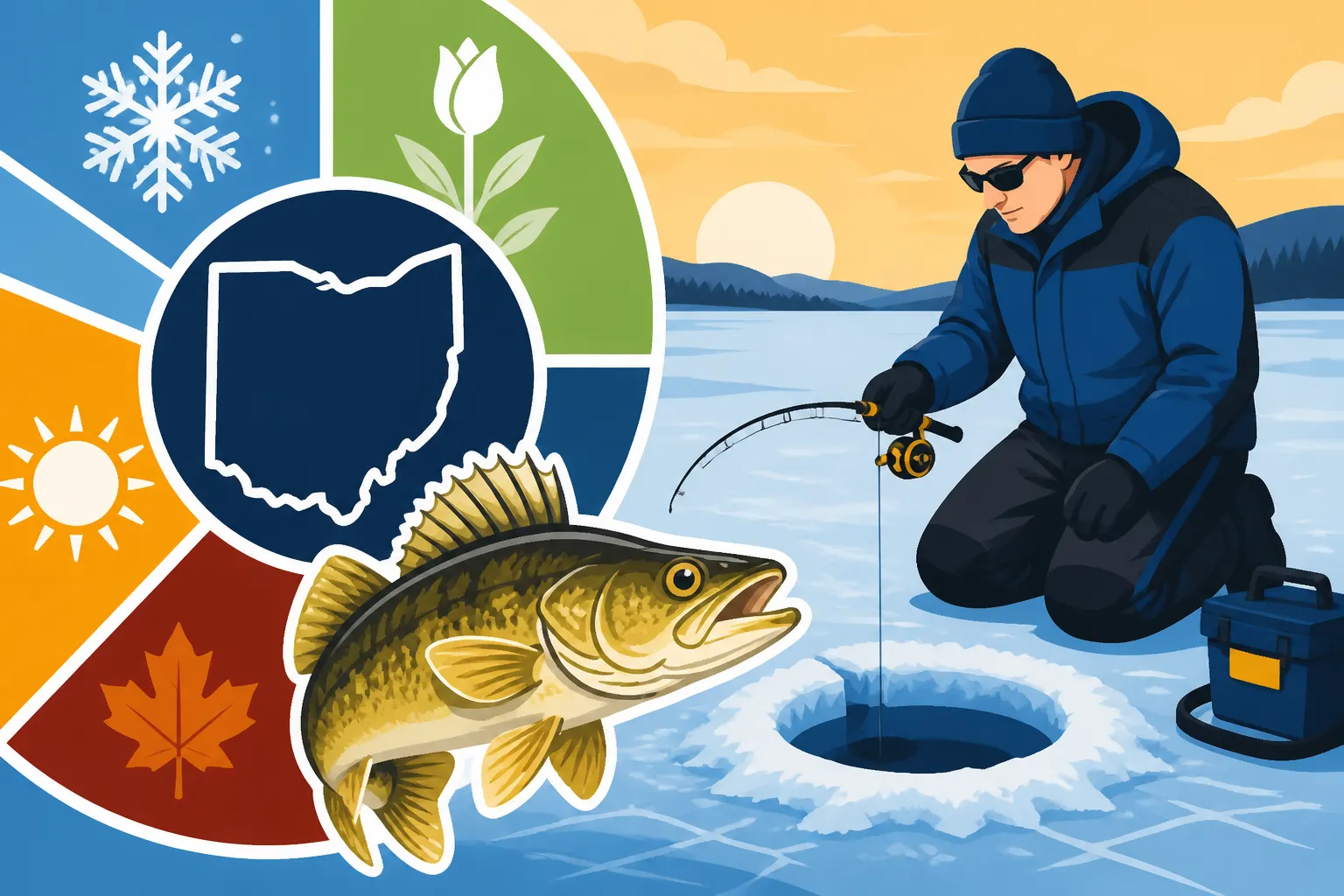
Early ice, usually from late December through January in Ohio, is often considered the most exciting and productive time for walleye. This is when the first safe ice forms, typically around 4-6 inches, allowing cautious anglers to venture out. During this period, walleye are often still quite aggressive, feeding heavily before the full grip of winter slows their metabolism. They haven't been pressured much by anglers yet, making them less wary.
You’ll often find walleye in shallower depths during early ice, sometimes as shallow as 8-15 feet, especially near points, weed lines, and structural breaks. They’re still relating to structures that held baitfish during the late fall. Think about those main lake points or sudden depth changes in your favorite lake, like Indian Lake or Hoover Reservoir; these are prime areas. Safety, however, is paramount. Always check ice thickness rigorously. Many seasoned anglers carry ice picks and wear flotation suits during this precarious time. For a deeper dive into ice safety, make sure to check out our guide on How Thick Ice Should Be Before Fishing in Ohio.
Mid-Winter Chill: Adapting to Slower Bites
As winter settles in, usually from late January through February, the ice becomes thicker and more stable, often reaching depths of a foot or more. While safety generally improves, the fishing can get tougher. Walleye metabolism slows down considerably in the frigid water, making them less active and more reluctant to chase baits. They tend to move to deeper basin areas or suspend over open water, seeking out stable water temperatures and schools of baitfish.
Success during mid-winter often comes down to patience, finesse, and thorough reconnaissance. You might need to target depths of 20-40 feet, or even deeper in larger bodies of water like Lake Erie's protected bays or large reservoirs like Mosquito Lake. Fish finders become indispensable for locating these deeper-holding fish and understanding their movements. You’ll need to work your lures slower and present them more subtly. It’s not uncommon to spend an hour or more over a single hole, waiting for that subtle "tick" that indicates a curious walleye. This is where dedication truly pays off.
Late Ice: A Renewed Opportunity
Just when you think winter fishing might be winding down, late ice, typically March, offers a fantastic resurgence in walleye activity. As the days lengthen and the sun's intensity increases, the ice begins to melt from the top, and warmer water starts trickling in, increasing oxygen levels. This triggers a pre-spawn feeding frenzy for walleye, as they bulk up for the upcoming spawning season.
Walleye during late ice often move back into shallower areas, congregating near river mouths, current areas, and main lake points where they will eventually stage for spawning. You can find them surprisingly shallow again, sometimes in 5-15 feet of water. This is a great time to be aggressive with your presentations, as these fish are actively feeding. However, just like early ice, late ice demands extreme caution regarding ice safety. The ice can become honeycombed and unstable quickly, especially around shorelines and inlets. Always err on the side of caution. Remember to ensure your fishing license is up to date for the new season, as many Ohio licenses expire at the end of February or early March. For details on validity, refer to How Long an Ohio Fishing License Stays Valid.
Daily Timing and Environmental Factors for Walleye
Beyond the seasonal shifts, the daily timing and a host of environmental factors play a massive role in when walleye decide to bite under the ice. It’s not just about what month it is; it’s about what the fish are experiencing right now.
Dawn and Dusk: The Golden Hours
Walleye are notoriously low-light feeders, and this holds true even under a sheet of ice. The periods around dawn (roughly an hour before and an hour after sunrise) and dusk (an hour before and an hour after sunset) are consistently the most productive times for ice fishing. During these "golden hours," light penetration through the ice is at its lowest, giving walleye a distinct advantage over their prey, which might rely more on sight in brighter conditions.
It's not uncommon for a flurry of activity to occur during these times, especially if you're set up over a good piece of structure or a known walleye travel route. Many dedicated anglers brave the pre-dawn darkness to be on the ice and have their lines down right when the sun begins to peek. Similarly, staying out until after sunset can often yield incredible results, especially as fish move into shallower feeding flats. Don't overlook the potential for significant bites during these transitional light periods; they are often the most rewarding of the day. For more general advice on fishing times, consider our Best Time of Day to Fish in Ohio guide.
Midday Lulls and Power Bites
While dawn and dusk are typically prime, midday can often be a true test of patience for walleye ice anglers. The brighter light penetrating the ice can make walleye more cautious, driving them deeper or causing them to hug the bottom more tightly. During these periods, you might experience a significant lull in activity. However, don't despair entirely.
Midday can still produce "power bites" if specific conditions align. Overcast skies, active snowfalls, or approaching weather fronts can significantly improve midday action by reducing light penetration or stimulating fish activity. In these situations, walleye might become more aggressive than usual. If you're encountering a slow midday, try experimenting with different depths, moving to new holes, or drastically changing your lure presentation. Sometimes, a subtle jigging motion or a dead-sticked minnow under a tip-up is all it takes to entice a reluctant walleye during these slower hours.
Weather, Pressure, and Moon Phases
Beyond just light conditions, a multitude of environmental factors are constantly influencing walleye behavior. Barometric pressure is a big one. A steady or slowly falling barometer, often indicative of an approaching weather system, tends to activate walleye. They sense the change and often go on a feeding binge before the storm hits. Conversely, a rapidly rising or high, stable pressure, typically associated with clear, cold days after a front, often results in tougher fishing. This is a concept explored in detail in our Does Barometric Pressure Affect Ohio Fishing? article.
Cloud cover is almost always a good thing for walleye fishing, as it reduces light penetration and makes fish more comfortable moving and feeding throughout the day. Bright, sunny days can drive walleye into deeper water or tighter cover. Wind, while challenging for anglers, can sometimes create current under the ice in certain areas, which can concentrate baitfish and thus walleye. Lastly, while less understood, many experienced ice anglers swear by moon phases, often noting increased activity around new and full moons, especially during moonrise and moonset. Keeping a close eye on all these factors can give you a significant edge.
Gear and Technique Adjustments for Peak Performance
Having the right gear and knowing how to adjust your techniques are paramount for consistent walleye ice fishing success. The fish might be down there, but if you're not presenting your offerings correctly, you'll miss out on those precious bites.
Essential Ice Fishing Gear for Walleye
When you're out on the ice, especially in Ohio's sometimes unpredictable winter weather, having the right equipment isn't just about comfort; it's about efficiency and safety. First and foremost, a reliable auger is critical. While manual augers are fine for smaller holes or lighter ice, a good power auger or a high-quality hand auger can save you a lot of time and effort when drilling multiple holes, which is often necessary to locate active walleye. You can find excellent options, like those from Strikemaster or Eskimo, on Amazon for competitive prices.
Next, a good fish finder or flasher is almost non-negotiable for walleye. Units like the Marcum LX-7 or Humminbird Ice Helix series allow you to see your lure, the fish, and how they react in real-time, giving you immediate feedback. This instant feedback is invaluable for figuring out what presentation works. Many anglers find great deals on these advanced electronics on Amazon, making it easier to equip yourself for success. Comfortable, insulated boots and a warm ice fishing suit are also non-negotiables. Don't forget a sturdy ice scoop, a reliable headlamp for those golden hours, and a spud bar for checking ice thickness. For more specific gear recommendations, be sure to read our Best Auger for Ohio Ice Fishing and Reading Ohio Fish Finders and Electronics guides.
Lure and Bait Selection by Season
The lures and baits you choose should definitely be influenced by the ice season you're fishing. During early ice, when walleye are aggressive, larger, more active baits often shine. Jigging raps, blade baits (like a Silver Buddy), or spoons (like a Northland Forage Minnow Spoon) in bright or natural colors can trigger reaction strikes. Tipping these with a minnow head or a small plastic grub can add extra enticement.
As we move into mid-winter, a more finesse approach is typically required. Smaller jigs (1/8 to 1/4 ounce) tipped with live minnows (shiners or fatheads) or small plastic grubs fished very subtly are often more effective. Dead-sticking a minnow under a Best Tip-Up Setup for Ohio Walleye is also incredibly potent. For late ice, as walleye activity picks up again, you can often go back to more aggressive presentations, sometimes even larger baits, mimicking the larger forage they’re targeting before spawning. Remember, always have a variety of options on hand. For general lure advice, check out Best Lures for Ohio Fishing.
Mastering Ice Fishing Techniques for Walleye
Technique is everything when the bite is tough. During early and late ice, you can often get away with a more aggressive jigging stroke – lifting your lure 6-12 inches and letting it fall, often followed by a brief pause. Experiment with how long you pause; sometimes a long pause is what triggers the strike. "Hole hopping" is also a fantastic technique, especially during early and late ice, where you move from hole to hole, actively searching for fish rather than waiting for them to come to you.
In mid-winter, however, subtlety is key. Your jigging stroke might shrink to just an inch or two, often barely quivering the bait. Dead-sticking (leaving a rod perfectly still in a rod holder) with a live minnow can be incredibly effective when fish are sluggish. Always pay attention to your flasher; if fish come in and ignore your bait, try changing colors, sizes, or even switching to a different lure entirely. Sometimes, the slightest change in presentation can make all the difference. Remember, if a cold front has just rolled through, you’ll need to adjust your approach even further, as discussed in How to Adjust Technique After a Cold Front.
Here’s a quick overview of what to expect and how to adapt:
| Season Phase | Walleye Activity | Preferred Depths (Avg.) | Best Techniques | Lure/Bait Focus | Key Challenges |
|---|---|---|---|---|---|
| Early Ice | Aggressive, active | 8-15 feet (structure) | Active jigging, hole hopping | Jigging raps, spoons, blade baits (tipped) | Ice safety, finding first safe ice |
| Mid-Winter | Slower, lethargic | 20-40+ feet (basin, suspended) | Finesse jigging, dead-sticking tip-ups | Small jigs, live minnows, soft plastics | Locating fish, slow bites, staying warm |
| Late Ice | Pre-spawn surge, active | 5-20 feet (staging areas) | Aggressive jigging, hole hopping | Larger spoons, jigging raps, live bait | Ice safety (deteriorating ice), finding staging areas |
To truly become proficient at targeting walleye, understanding their broader behavior is crucial. Our comprehensive Ohio Walleye Fishing Guide offers even more insights that can be applied across all seasons. If you're looking to learn directly from the pros, consider checking out Ice Fishing Guide Services in Ohio who can often accelerate your learning curve.
Disclaimer
Fishing conditions and regulations in Ohio can change. Always consult the latest Ohio Department of Natural Resources (ODNR) fishing regulations booklet or website before heading out on the water. This information is for general guidance and educational purposes only.