Ohio Trolling Techniques for Lake Erie
One of the biggest head-scratchers for anglers looking to seriously target walleye on Lake Erie is figuring out the sprawling world of trolling. It's not just about putting a line in the water and driving around; it's a nuanced art form that, when mastered, can lead to incredible success. Many folks get frustrated because they've tried trolling with limited success, maybe just dragging a crankbait with no idea how deep it's running, or getting tangled with multiple lines. This guide is here to untangle those frustrations, providing a comprehensive deep dive into the specific trolling techniques that consistently put walleye in the boat on Ohio's magnificent Lake Erie.
Understanding Lake Erie's Trolling Dynamics
Lake Erie, often hailed as the "Walleye Capital of the World," isn't just a big pond; it's a dynamic ecosystem that demands specific approaches, especially when it comes to trolling. Its vastness, varying depths, and often unpredictable weather patterns mean that a one-size-fits-all trolling strategy simply won't cut it. Trolling here means adapting to conditions, understanding fish behavior, and utilizing specialized gear to present your lures effectively across miles of water.
The Western, Central, and Eastern Basins
Lake Erie is geographically divided into three distinct basins: the Western, Central, and Eastern. Each basin presents its own unique challenges and opportunities for trolling anglers.
- The Western Basin: This is the shallowest and warmest part of the lake, characterized by numerous islands and reefs. Early in the season, particularly during the spawn and post-spawn, this basin comes alive with walleye. Trolling here often means working shallower depths, sometimes as little as 10-25 feet. The walleye tend to be more scattered as they feed on baitfish moving off the spawning grounds, making controlled presentations crucial. You're often dealing with more structure, which means being vigilant about snags, but also knowing that structure can hold fish. The clarity can vary greatly, impacting lure color choices. For anyone interested in the specifics of this area, exploring resources on Ohio's Western Basin of Lake Erie can provide valuable local insights.
- The Central Basin: As you move east from the Western Basin, the lake deepens considerably, often reaching depths of 60-80 feet or more. This basin is a walleye factory throughout the summer months as fish migrate from the western shallows to cooler, deeper water. Trolling here frequently involves targeting suspended fish in the middle of the water column, often 20-40 feet down over much deeper water. The baitfish, primarily emerald shiners and gizzard shad, will be schooled up, and finding these bait balls on your electronics is key to finding active walleye. The sheer amount of water to cover makes efficient trolling techniques paramount.
- The Eastern Basin: This is the deepest part of Lake Erie, with depths exceeding 200 feet in some areas. While still holding walleye, this basin is often more renowned for its smallmouth bass and even steelhead fishing. Trolling for walleye here typically occurs in specific areas where the depth contours provide suitable habitat, and often at greater depths than in the other basins. The water is generally clearer, which can influence lure selection and trolling speed. Anglers might find less pressure here for walleye, but the search can be more challenging without local knowledge.
Understanding Walleye Behavior in Lake Erie
Successful trolling isn't just about where you are on the lake, but also understanding why the walleye are there and what they're doing. Walleye are highly sensitive to light and temperature, which dictates their daily and seasonal movements.
- Light Sensitivity: Walleye have excellent low-light vision, which is why they are often most active at dawn, dusk, and on cloudy days. When the sun is high and bright, they tend to move deeper, seek shade under baitfish schools, or hug the bottom. This means your trolling depth needs to adjust throughout the day. If you’re marking fish deeper in bright conditions, don’t be afraid to send your lures down to meet them. Conversely, on overcast days, they might be much shallower and more aggressive.
- Water Temperature: Temperature is a huge driver of walleye activity and location. They prefer water temperatures in the 50-70 degree Fahrenheit range. In spring, as shallow waters warm, walleye move in to spawn and feed. As summer progresses and surface temperatures climb, they seek cooler thermoclines or deeper offshore structures. Identifying the thermocline (a distinct temperature layer in the water) with your fishfinder is often critical, as walleye will frequently stack up just above, within, or just below it, feeding on baitfish that are also holding in these temperature breaks. Knowing the Best Water Temperature for Ohio Walleye can significantly impact your success.
- Prey Drive and Baitfish Movement: Walleye are opportunistic predators, and their movements are heavily influenced by the availability and movement of their prey. Emerald shiners, gizzard shad, and smelt are primary forage. Trolling effectively often means identifying baitfish schools on your sonar and targeting the edges or underneath these schools where walleye are likely ambushing their meals. If you're marking huge schools of bait but no walleye, try fishing just below them or off to the side.
Essential Trolling Gear for Lake Erie Walleye
Getting serious about trolling for Lake Erie walleye means investing in the right gear. Skimping here can lead to lost fish, tangled lines, and endless frustration. From rods and reels built for the task to specialized line and fish-finding electronics, each component plays a vital role in your success.
Rods, Reels, and Line Selection
The foundation of any good trolling setup starts with a balanced rod, reel, and line combination designed to handle the stresses of pulling multiple lures, fighting strong walleye, and withstanding the constant abuse of lake conditions.
- Trolling Rods: For Lake Erie walleye, dedicated trolling rods are a game-changer. These aren't your typical casting rods. Look for rods in the 7 to 10-foot range, usually medium to medium-heavy power, with a moderate to slow action. The longer length helps spread out your lines and provides a smoother parabolic bend when fighting a fish, absorbing surges and preventing hooks from pulling out. The moderate action is crucial for detecting subtle bites from walleye, which often just "load up" the rod tip rather than a sharp strike. Many anglers opt for fiberglass or composite rods for their durability and consistent action under load. Brands like Daiwa, Ugly Stik, and Shimano offer excellent options that you can find on popular online marketplaces like Amazon.
- Trolling Reels: Line counter reels are absolutely non-negotiable for effective Lake Erie trolling. These reels feature a mechanical counter that tells you exactly how much line you have out, allowing you to replicate successful presentations precisely. This is vital when you find a specific depth or distance behind the boat that's producing fish. Look for reels with a smooth drag system and a decent line capacity, capable of holding 200-300 yards of 10-14 pound test monofilament or braid. Again, reliable brands such as Daiwa Accudepth or Shimano Tekota are popular choices.
- Line Selection: This is where things get a little nuanced.
- Monofilament: A good quality 10-14 pound test monofilament is a solid choice for many trolling applications, especially for crankbaits. It has a bit of stretch, which acts as a shock absorber, helping to prevent hooks from pulling out of a walleye's mouth, especially when using planer boards. Its slight buoyancy also helps some shallow-diving crankbaits achieve their optimal action.
- Braided Line: Braided line (often 20-30 pound test, equivalent to 6-10 pound mono diameter) has become incredibly popular, especially for use with planer boards, dipsy divers, or downriggers. Its zero stretch provides superior sensitivity, allowing you to feel even the slightest tap or know instantly if your lure is fouled. Its thinner diameter also means less water resistance, which can help your lures run deeper with less line out. When using braid, a leader of 10-17 pound fluorocarbon or monofilament (5-10 feet long) is almost always recommended. This leader provides stealth in clearer waters, offers abrasion resistance, and still gives a little stretch at the lure end. For a comprehensive overview, checking out Choosing the Right Ohio Fishing Line can be beneficial.
Electronics and Navigation
Modern electronics have revolutionized trolling, turning what used to be a lot of guesswork into a precise science. Don't leave the dock without these crucial tools.
- Fish Finders/Sonar: A high-quality fish finder is your eyes below the surface. Look for units with clear, high-resolution screens and CHIRP sonar capabilities. This technology helps distinguish fish from structure, identify bait balls, and most importantly, pinpoint the thermocline. Many modern units from Humminbird or Lowrance also integrate GPS, mapping, and side-imaging features. Side imaging can be invaluable for locating suspended schools of fish or structure off to the sides of your boat, allowing you to steer towards them. Learning to effectively use these units by studying resources like Reading Ohio Fish Finders and Electronics is paramount.
- GPS and Chartplotters: While many fish finders have integrated GPS, having a dedicated unit or a robust chartplotter is essential for navigation, marking waypoints, and tracking your trolling passes. You'll want to mark areas where you catch fish, successful trolling lines, and any underwater structure you identify. This allows you to return to productive spots with precision. Marine mapping software, often pre-loaded or available via chip, provides detailed contours, depths, and navigational aids for Lake Erie.
- Autopilot/Trolling Motor with GPS Anchor: For serious trolling, an autopilot system or a bow-mount electric trolling motor with GPS "anchor" functionality is a game-changer. These systems allow you to maintain a precise course and speed, even in wind and waves, freeing you up to manage lines and net fish. This consistent boat control is absolutely critical for presenting lures effectively over long trolling passes and replicating successful patterns.
Planer Boards, Dipsy Divers, and Downriggers
These are the tools that allow you to present multiple lines over a wide area and target specific depths, essential for covering water on Lake Erie.
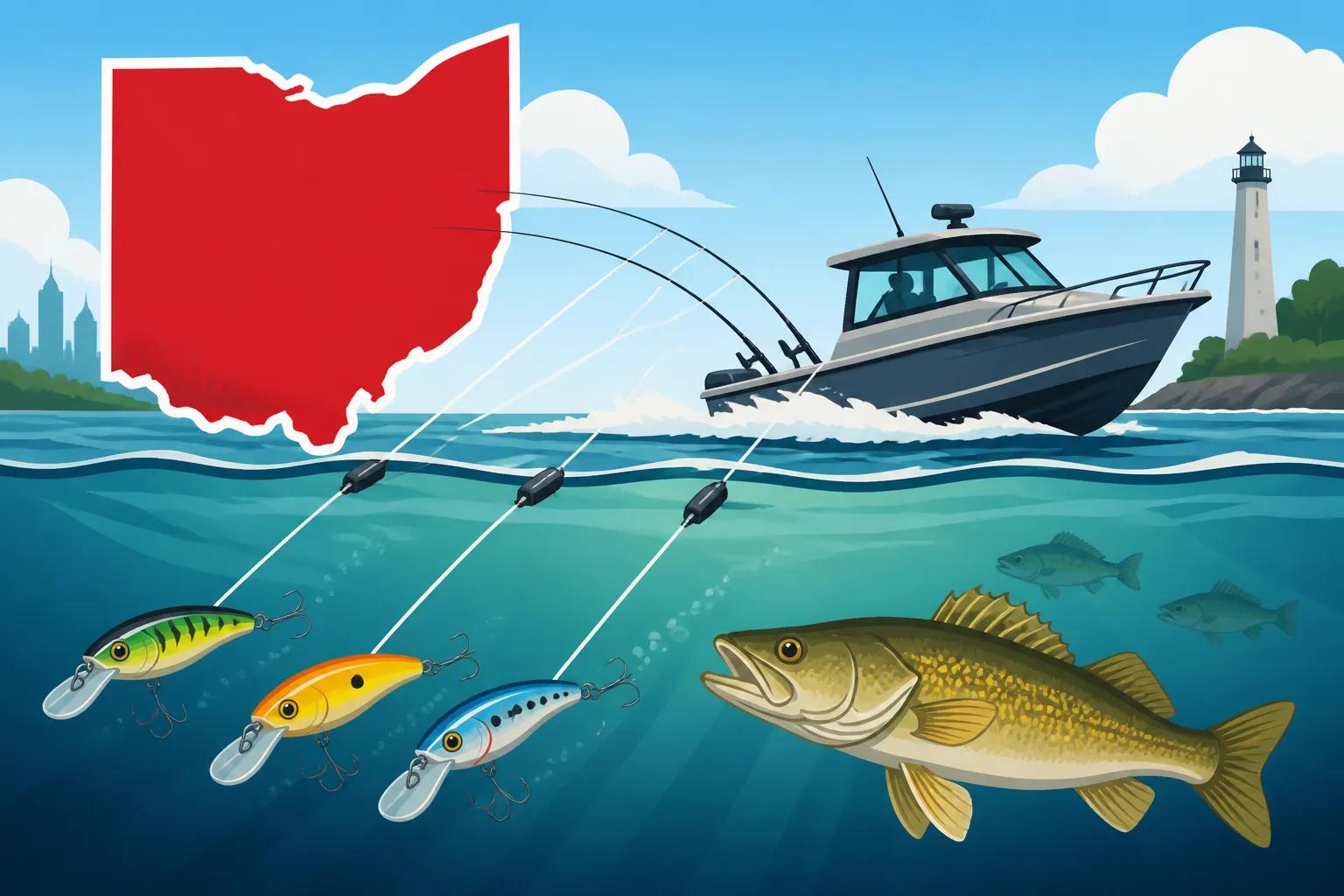
- Planer Boards: These are arguably the most iconic trolling tool on Lake Erie. Planer boards are designed to pull your fishing lines out to the side of the boat, spreading them out over a wide swath of water. This allows you to fish many lines simultaneously without tangling and target fish that might be spooked by the boat's motor. There are various styles, from larger mast systems to smaller, individual inline boards (like Off Shore Tackle boards) that clip directly to your line. Inline boards are incredibly popular due to their ease of use and ability to run several lines per side. A great resource on How to Set Up Planer Boards for Lake Erie Walleye can guide you further.
- Dipsy Divers (or Dipsey Divers): Dipsy divers are disc-shaped diving devices that take your lure down to a specific depth and also pull your line out to the side. They have an adjustable trip mechanism that releases when a fish strikes, allowing you to fight the fish without the diver's resistance. They are highly effective for targeting specific depths and are a good alternative or complement to planer boards, especially when fish are concentrated at a certain depth off to the side of the boat.
- Downriggers: While perhaps less common for typical walleye trolling than planer boards or Dipsy divers, downriggers are incredibly effective for precise depth control, particularly when walleye are holding deep and suspended. A downrigger uses a heavy weight (cannonball) to carry your line and lure down to an exact depth. Your fishing line is clipped to the downrigger cable with a release clip, and when a fish strikes, the line releases, allowing you to fight the fish directly. They offer unparalleled depth accuracy and can be especially useful in the deeper Central or Eastern Basins.
Key Trolling Techniques and Presentations
Once you have your gear sorted, it's time to understand the different ways you can present your lures. Each technique has its strengths and is suited for different conditions and fish behaviors on Lake Erie.
Planer Board Trolling
Planer board trolling is the bread and butter for many Lake Erie walleye anglers, allowing them to cover vast expanses of water and present lures away from the boat's disturbance.
- Spreading the Spread: The primary advantage of planer boards is creating a wide "spread" of lures. Typically, anglers run 2-4 boards on each side of the boat, staggering the lines so the outermost board has the most line out and the innermost has the least. This prevents tangles and ensures your lures are covering a wide path. You'll want to ensure adequate spacing between lines as you deploy them. Start with the furthest board out, run it, then deploy the next one closer to the boat with less line out. This minimizes crisscrossing.
- Inline vs. Mast Systems: Many casual and even dedicated anglers on Lake Erie opt for inline planer boards, such as those made by Off Shore Tackle. These attach directly to your fishing line and run out to the side. They're easy to deploy, retrieve, and store. For larger spreads or more consistent performance in rough water, a mast system with larger boards can be employed, but they require more deck space and setup. For insights on necessity, consider Do You Need Planer Boards to Catch Lake Erie Walleye?.
- Monitoring and Adjustment: Constantly watching your boards is key. A board that slows down or drifts back slightly indicates a fish has hit, or your lure has picked up debris. Learning to "read" your boards for these subtle changes is a skill developed over time. If a board lags, you need to reel it in, check your lure, and redeploy. This constant monitoring is part of the rhythm of trolling with boards.
Dipsy Diver and Jet Diver Techniques
When fish are scattered or holding at specific depths off to the side, Dipsy or Jet divers can be incredibly effective, offering a more direct route to the strike zone.
- Controlled Depth and Direction: Dipsy divers have a weighted keel and an adjustable ring that allows you to control how deep they dive and which direction they pull. By setting the ring to different numbers (0, 1, 2, 3), you can make them run straight back, or off to the port or starboard side. This versatility makes them excellent for targeting specific depth contours or spreading lines when you don't want to deploy full planer boards. Jet divers operate similarly but are typically less adjustable in terms of sideways pull.
- Matching Diver Size to Depth and Line: Divers come in various sizes (e.g., #0, #1, #2), with larger divers capable of reaching greater depths. The amount and type of line you use also affect depth. Thinner diameter braided line will allow your diver to run deeper than monofilament with the same amount of line out. A general rule of thumb is to use a leader of 6-10 feet of fluorocarbon from the diver to your lure for added stealth.
- The "Trip" Mechanism: Dipsy divers feature a trip mechanism that releases tension when a fish strikes. This makes fighting the fish much easier, as you're no longer fighting the resistance of the diving device. Sometimes, a smaller walleye or a snag won't trip the diver, so it's essential to periodically check your divers for debris or small fish that might be dragging.
Downrigger Fishing
While more common for salmon or trout in other Great Lakes, downriggers are invaluable on Lake Erie when walleye are suspended deep and you need surgical precision in your depth presentation.
- Pinpoint Depth Control: Downriggers offer the most precise depth control of any trolling method. You can set your lure exactly at the depth where you're marking fish or bait. This is particularly useful in the deeper Central and Eastern Basins when fish might be holding in a very narrow band of the water column, often associated with the thermocline.
- Minimizing Line Resistance: With a downrigger, only your lure and a short section of leader are in the water column when you're fishing. The main fishing line is clipped to the downrigger cable. This means less line resistance and a more natural presentation of your lure. When a fish hits, your line "pops" from the release clip, giving you a direct fight with the fish without the drag of a planer board or diver.
- Considerations for Walleye: For walleye, lighter downrigger weights (6-10 lbs) and lighter release clips are usually sufficient. Experiment with how far back you "stack" your lure from the downrigger ball – sometimes 20 feet is enough, other times 100 feet or more is needed for finicky fish. The "blowback" (how far back the lure drifts from the ball due to water resistance) needs to be considered to truly know your lure's depth.
Lures and Baits: Matching the Hatch on Lake Erie
The effectiveness of your trolling technique is only as good as the lure you're presenting. Lake Erie walleye have diverse diets, and knowing which lures work best, and in what colors, is crucial for success.
Crankbaits
Crankbaits are a staple for Lake Erie walleye trolling, imitating the various baitfish species that walleye prey on.
- Diving Depth and Action: Crankbaits are designed to dive to specific depths based on their lip size and shape, retrieve speed, and line diameter. You need to know how deep your chosen crankbait runs at your trolling speed to effectively put it in the strike zone. Deeper running cranks might be used with a simple flatline off the back of the boat, while medium to shallow runners are excellent for use with planer boards. Experiment with different actions – some crankbaits have a tight wiggle, others a wide wobble, and walleye can show a preference on any given day. Popular models like Reef Runner, Storm Deep ThunderStick, and Bandit Walleye Deep are consistent producers. For more details on effective crankbaits, refer to Best Crankbait Color for Lake Erie Walleye.
- Color Selection: Walleye can be incredibly finicky about color. A good rule of thumb is to start with natural baitfish patterns in clear water and brighter, more contrasting colors (like chartreuse, firetiger, or orange) in stained or cloudy water. However, walleye often defy logic, and sometimes an oddball color will be the hot ticket. The key is to have a diverse selection and be willing to experiment. Keep track of what colors produce in certain conditions.
- Tuning and Speed: A crankbait needs to run true for optimal action. If a crankbait is pulling to one side, it needs "tuning" by gently bending the eyelet with pliers until it tracks straight. Your trolling speed is also paramount. Most crankbaits have an optimal speed range, typically between 1.2 to 2.5 mph for walleye. Too slow, and the lure won't have enough action; too fast, and it might "blow out" or look unnatural. Getting your Best Trolling Speed for Lake Erie Walleye dialed in is critical.
Spoons and Crawler Harnesses
While crankbaits get a lot of attention, spoons and crawler harnesses are equally effective and often necessary, especially when walleye are keyed in on specific forage or are more passive.
- Spoon Trolling: Spoons, with their fluttering, erratic action, are fantastic for imitating injured baitfish. They are particularly effective when pulled behind Dipsy divers or downriggers, where their action isn't hindered by the diving device. Thin, light spoons like those from Stinger, Michigan Stinger, or Silver Streak are popular. Color rules similar to crankbaits apply – natural in clear, bright in stained. Spoons are often excellent for suspended walleye that are feeding aggressively.
- Crawler Harnesses: Also known as "worm harnesses" or "spinner rigs," these are exceptionally productive. They consist of a snelled hook rig (often two or three hooks) adorned with beads and spinner blades, all designed to be tipped with a live nightcrawler. The spinner blade provides flash and vibration, while the nightcrawler offers natural scent and taste. Crawler harnesses are typically pulled behind bottom bouncers or weight-forward spinners, allowing them to track along the bottom or at specific depths. They are especially deadly in warmer water when walleye are feeding on the bottom or near structure. For deeper dives, explore How to Fish a Crawler Harness for Walleye.
- Blade Styles and Colors: Spinner blades for crawler harnesses come in various shapes (Colorado, Indiana, Willowleaf) and sizes, each producing different flash and vibration. Colorado blades offer maximum thump and vibration, great for stained water, while Willowleaf blades provide less drag and more flash, ideal for clear water or faster trolling. Color choices are vast, from metallic silver and gold to bright fluorescent hues. Again, be willing to experiment.
Live Bait Options
While artificial lures dominate trolling discussions, sometimes live bait is the undisputed champion, especially with crawler harnesses.
- Nightcrawlers: The quintessential live bait for walleye, especially when paired with a crawler harness. Always use fresh, lively nightcrawlers, stored properly to keep them healthy. Threading them onto a harness to ensure they spin naturally without balling up is an art form.
- Minnows: While less common for trolling on Lake Erie for walleye (more for perch or crappie), minnows can sometimes be incorporated into slow trolling presentations or jigging. If using minnows, ensure they are fresh and legally sourced according to Ohio regulations.
Reading the Water and Weather for Trolling Success
Trolling on Lake Erie isn't just about deploying lines; it's about constantly interpreting the environment around you. The water, the sky, and even the barometric pressure all provide clues to where the walleye might be and what they might be willing to bite.
Interpreting Water Conditions
The clarity, temperature, and current of the water are major factors influencing walleye behavior and, consequently, your trolling strategy.
- Water Clarity: Lake Erie's clarity can range from gin-clear in the Eastern Basin to murky and stained in parts of the Western Basin, especially after heavy rains or strong winds. In clearer water, walleye are more visually oriented, making natural baitfish patterns, fluorocarbon leaders, and longer lead lengths behind divers or boards more effective. In stained or turbid water, vibrations and bright, contrasting colors become paramount, as walleye rely more on their lateral line to detect prey. Consider slowing down your trolling speed in murky water to give fish more time to locate your lure.
- Water Temperature and Thermocline: As discussed, walleye are highly temperature-sensitive. Your fish finder is essential for locating the thermocline – the distinct layer where warm surface water meets cooler deep water. Walleye often congregate around this temperature break, as do baitfish. Trolling your lures just above, within, or just below the thermocline is a highly effective strategy, especially in the Central Basin during summer. Continuously monitor your surface temperature gauge and your fish finder to stay in the optimal temperature zone.
- Currents: While Lake Erie is a large lake, it does have subtle currents influenced by wind, seiches (sloshing water movements), and river inflows. These currents can affect your trolling speed over ground, lure action, and even fish orientation. Trolling with or against the current will change your lure's action and depth. Often, walleye will face into the current to ambush prey, so trolling against it can present your lure more naturally to them.
Reading Weather Patterns
The weather can drastically alter fish behavior, sometimes in minutes. Being attuned to shifts in wind, cloud cover, and barometric pressure can give you a significant edge.
- Wind Direction and Speed: Wind creates waves, which can make boat control challenging but can also be good for fishing. A chop on the water breaks up light penetration, often making walleye more active and willing to move shallower. However, very heavy winds can create strong currents, stack up baitfish, and make trolling difficult and unsafe. Pay attention to how wind direction impacts clarity – an onshore wind can stir up shallow areas and bring baitfish closer to shore. For specific insights, check out Does Wind Direction Matter for Lake Erie Walleye Fishing?.
- Cloud Cover and Light Levels: Overcast days are often fantastic for walleye trolling because the reduced light penetration allows them to remain active at shallower depths throughout the day. Conversely, bright, sunny days often push walleye deeper or into dense baitfish schools. Adjust your trolling depth and lure colors accordingly. Dawn and dusk are prime low-light periods, regardless of cloud cover, and should be maximized.
- Barometric Pressure: While less tangible than wind or clouds, barometric pressure changes can significantly influence fish behavior. A steady, high-pressure system typically brings stable weather and can sometimes make fish lethargic. Falling pressure (often preceding a storm) can trigger a feeding frenzy, while rapidly rising pressure after a front can make fish shut down. While you can't control the weather, being aware of these trends helps set expectations and adjust tactics. An article on Does Barometric Pressure Affect Ohio Fishing? might offer further detailed explanations.
Advanced Trolling Strategies and Troubleshooting
Once you've mastered the basics, it's time to refine your approach and tackle some of the more complex scenarios that Lake Erie can throw at you. From fine-tuning your presentation to troubleshooting common problems, these advanced tips can help elevate your success.
Fine-Tuning Your Presentation
The difference between a slow day and a banner day often comes down to minute adjustments in your trolling setup.
- Speed Control (GPS Speed vs. Water Speed): Your boat's speed over ground (GPS speed) and its speed through the water (which can be affected by current) are both important. Most trolling speeds for walleye range from 1.0 to 2.5 mph. Use your GPS for consistent speed over ground. However, understand that if you're trolling into a 0.5 mph current at 1.5 mph GPS speed, your lure is only moving through the water at 1.0 mph. Conversely, with a tailing current, your lure moves faster. Experiment with speed changes, even by 0.1 mph increments, as this can dramatically alter lure action and trigger strikes.
- Lead Lengths and Depth Curves: The amount of line you let out, known as your "lead length," directly affects how deep your lure runs. Mastering depth curves for your specific lures and trolling speed is crucial. Many lure manufacturers or online resources provide dive curves, but conditions vary, so practice and observation are key. Keep a logbook to record successful lead lengths for specific lures and depths. This information becomes invaluable when replicating success. Remember to consider How Deep to Troll for Walleye in Early Summer if you're out early in the season.
- Color Rotation and Size Adjustment: Don't be afraid to change lure colors frequently until you find what the fish prefer. If one color is producing, try another similar shade, or a contrasting one to see if you can double your success. Similarly, if you're getting hits but not hooking up, consider going to a smaller lure size. If fish are aggressive, sometimes a larger profile will attract bigger bites. Have a wide variety of lure sizes and colors at the ready.
Troubleshooting Common Trolling Problems
Even experienced anglers encounter issues. Knowing how to quickly diagnose and fix common trolling problems can save your day on the water.
- Fouled Lures: One of the most common and frustrating problems is a lure that's not running correctly because it's fouled with weeds, debris, or a small trash fish. If a planer board stops tracking correctly, or your rod tip isn't vibrating as it should, immediately check that line. Reel it in, clean the lure, and redeploy. This is why good planer board releases and sensitive rods are so important.
- Lack of Bites: If the bite suddenly dies, it's time for a systematic troubleshooting approach.
- Check Depth: Have fish moved shallower or deeper? Confirm your lure is in the strike zone using your fish finder.
- Change Speed: Adjust your trolling speed up or down in small increments.
- Rotate Colors/Lures: If you were on a hot bite, try a different color or lure that performed well in similar conditions previously.
- Check Location: Have you drifted out of the productive area or away from baitfish schools?
- Look for Environmental Changes: Has the wind shifted, did the sun come out, or did the water clarity change?
- Tangles: Tangles are the bane of multi-line trolling. They often occur during turns, when deploying lines, or from boat traffic.
- Turns: Make wide, sweeping turns to minimize tangles. The lines on the inside of the turn will slow down and drop, while the lines on the outside will speed up and rise. This can lead to tangles. Knowing your boat's turning radius helps.
- Deployment: Always deploy your furthest lines first, working your way inward. Ensure your planer boards are running smoothly and not lagging behind.
- Boat Traffic: Be mindful of other boats. If you need to cross another boat's path, communicate or adjust your spread to avoid crossing lines.
Seasonal Trolling Adjustments for Lake Erie
Lake Erie's walleye fishing is a year-round affair for many, but successful trolling techniques shift dramatically with the seasons. What works in April won't necessarily work in August.
Spring Trolling (April-May)
Spring on Lake Erie often revolves around the walleye spawn and post-spawn movements, typically occurring in the Western Basin.
- Post-Spawn Aggression: After the spawn, walleye are hungry and often aggressive as they recover and seek out baitfish. They will be moving off the reefs and into shallower feeding areas.
- Shallow Water Tactics: Expect to troll in depths of 10-30 feet, often closer to shore or over shallow reefs. Short lead lengths and shallow to medium-diving crankbaits are highly effective, often run off planer boards. Look for areas with warmer water pockets, as these will attract baitfish and walleye.
- Focus on the Western Basin: The Western Basin is the hotspot in spring. Target areas around the islands, like Kelleys Island and South Bass Island, or along the Ohio shoreline from Toledo to Port Clinton. Understanding the Best Time of Year to Fish Lake Erie for Walleye often starts here.
Summer Trolling (June-August)
Summer sees walleye migrating to cooler, deeper water, making the Central Basin a prime destination for trolling.
- Deep and Suspended Fish: Walleye will often be suspended in the water column, often above or within the thermocline in 30-70 feet of water, over depths sometimes exceeding 80 feet.
- Diverse Presentations: This is when planer boards with long lead lengths, Dipsy divers, and even downriggers truly shine. Deeper diving crankbaits, spoons, and crawler harnesses are all effective. The key is to find the fish's preferred depth and stay there.
- Focus on the Central Basin: From Sandusky to Cleveland, the Central Basin becomes the walleye hub. Look for large schools of baitfish on your electronics in open water. This is where mastering Trolling for Lake Erie Walleye techniques becomes paramount.
Fall Trolling (September-November)
Fall can be a fantastic time for trophy walleye, as fish begin to feed heavily in preparation for winter.
- Aggressive Feeding: Walleye become increasingly aggressive as water temperatures cool, often moving shallower again in search of abundant baitfish. They are putting on weight for the colder months.
- Mixed Depths and Techniques: You might find walleye in a wide range of depths, from shallow flats to deeper breaks. A mix of medium to deep-diving crankbaits, large spoons, and beefed-up crawler harnesses can all produce. Sometimes, fish will move back into the Western Basin, other times they'll remain in the Central.
- Big Fish Potential: Fall offers some of the best opportunities for catching true "hawg" walleye. Don't be afraid to use slightly larger profile lures. The weather can be unpredictable, so watch forecasts closely for safe boating conditions.
Safety and Etiquette While Trolling on Lake Erie
Lake Erie is a massive body of water, and while it offers incredible fishing, it demands respect. Safety and proper etiquette are paramount for an enjoyable and responsible fishing experience.
Essential Safety Measures
Never take safety for granted on Lake Erie. The weather can change rapidly, and being prepared is not an option, it's a necessity.
- Life Jackets (PFDs): Ensure you have enough Coast Guard-approved life jackets for everyone on board, and that they are easily accessible. For children, they must wear them at all times. In rough conditions, it's wise for all adults to wear them as well.
- VHF Radio and Cell Phone: A working VHF marine radio is critical for communicating with other boats and the Coast Guard, especially offshore where cell service can be spotty. Always have a fully charged cell phone as a backup.
- Weather Monitoring: Check the marine forecast religiously before and during your trip. Use a weather app on your phone, listen to NOAA weather radio, or monitor your VHF for updates. Lake Erie can go from calm to dangerous conditions very quickly. Know your boat's limits and your own.
- Emergency Gear: Carry all required safety equipment, including flares, a first-aid kit, fire extinguisher, air horn/whistle, anchor, and sufficient rope. It’s also wise to have a spare propeller, basic tools, and extra fuel. For an extensive guide, consider familiarizing yourself with Ohio Fishing Regulations Every Angler Should Know, as they often include safety aspects.
- Float Plan: Always tell someone responsible where you are going, when you expect to return, and who is with you.
Trolling Etiquette on the Water
With many boats often congregating in productive areas, good manners on the water ensure everyone has a positive experience.
- Maintain Course and Speed: Once you've established your trolling course and speed, try to stick to it. Erratic changes can tangle lines with other boats or spook fish.
- Respect Other Anglers' Space: Give other boats ample room, especially when they are actively trolling. Don't crowd another boat's spread or cut directly in front of them. A general rule is to stay at least a few hundred feet away, especially from boats with wide planer board spreads.
- Communication: If you need to cross another boat's path or have a question, use your VHF radio or a polite wave. Clear communication helps prevent misunderstandings and tangles.
- Right of Way: Typically, the boat that is actively trolling has the right of way over a boat that is drifting or maneuvering. When in doubt, yield to avoid conflict.
- Mind Your Wake: Be mindful of your boat's wake, especially near anchored boats, docks, or smaller vessels. Your wake can jostle other boats, cause discomfort, and even be dangerous.
- Waste Disposal: Pack out everything you pack in. Never litter on Lake Erie. This includes fishing line, bait containers, and food wrappers. Responsible angling means preserving the environment for everyone.
Disclaimer
The information provided in this guide is for general informational purposes only. Fishing conditions, regulations, and fish behavior on Lake Erie can change rapidly. Always consult the latest official Ohio Department of Natural Resources (ODNR) fishing regulations before heading out. Fishing involves inherent risks, and personal safety should always be your top priority.