Best Water Flow for Steelhead Fishing on the Rocky River
Planning a steelhead trip to the Rocky River in Ohio can feel like a roll of the dice sometimes. You check the forecast, pack your gear, and drive all the way out there, only to find the water is either raging like a chocolate milk torrent or barely trickling over slippery rocks. It's incredibly frustrating when river conditions aren't cooperating, turning a promising day of fishing into a wasted effort. This guide is here to help you crack the code on the Rocky River's flow, ensuring you understand exactly what makes for ideal steelhead fishing conditions and how to monitor them, so your next trip is productive and safe.
Understanding the Rocky River's Unique Flow Dynamics
The Rocky River, like many of Ohio's prime steelhead tributaries, is a "freestone" river, meaning its flow is heavily dependent on natural precipitation and runoff. This characteristic gives it a dynamic personality, swinging from crystal-clear trickles to roaring torrents seemingly overnight. Understanding these dynamics is the first step to becoming a successful Rocky River steelhead angler.
The Impact of Weather on River Levels
Imagine a massive sponge absorbing water – that's essentially the Rocky River watershed. When rain falls, especially heavy or prolonged rain, that sponge saturates quickly, and the excess water rushes into the river. This can cause rapid increases in flow, leading to what we often call "blow-outs," where the river becomes high, fast, and heavily discolored. A little bit of rain can be a good thing, bringing in fresh fish and raising levels to a more fishable height. But too much, too fast, makes for unfishable conditions.
It's not just local rain, either. Remember that tributaries upstream, miles away from where you're casting, can contribute significant flow. Snowmelt in early spring can also drastically impact levels, leading to prolonged periods of high, cold water. Conversely, dry spells can cause the river to drop to critically low levels, making fish spooky and holding them in specific, hard-to-reach pockets. The key takeaway here is that conditions are rarely static; they are constantly reacting to the weather, both immediate and historical.
How Flow Rate Data is Measured and Interpreted
So, how do you know what the river is doing without driving all the way there? Anglers rely heavily on real-time stream gauge data, primarily provided by the U.S. Geological Survey (USGS). For the Rocky River, the most commonly referenced gauge is the one at Rockport, though the Berea gauge also provides useful information, usually showing slightly lower readings than Rockport due to its upstream location.
This data is expressed in "cubic feet per second" (cfs). Think of it as the volume of water passing a certain point every second. A higher cfs number means more water is flowing. The USGS website provides graphs that show current cfs, as well as historical averages and peaks, allowing you to compare today's conditions to what's typical for the season or what worked well on a previous trip. Many anglers also use apps that pull this USGS data directly, giving them a quick glance at current conditions on their phones. I often find myself checking the USGS site or a fishing app on my phone first thing in the morning, and again before I head out. It's a quick and easy way to gauge conditions, even if I'm just running to the tackle shop or browsing for new gear like Best Lures for Ohio Fishing on Amazon.
Ideal Flow Rates for Productive Steelhead Fishing
Every river has its sweet spot, and the Rocky River is no different. Finding this zone, where the water is just right, is where the magic happens for steelhead anglers.
The "Sweet Spot" for Active Steelhead
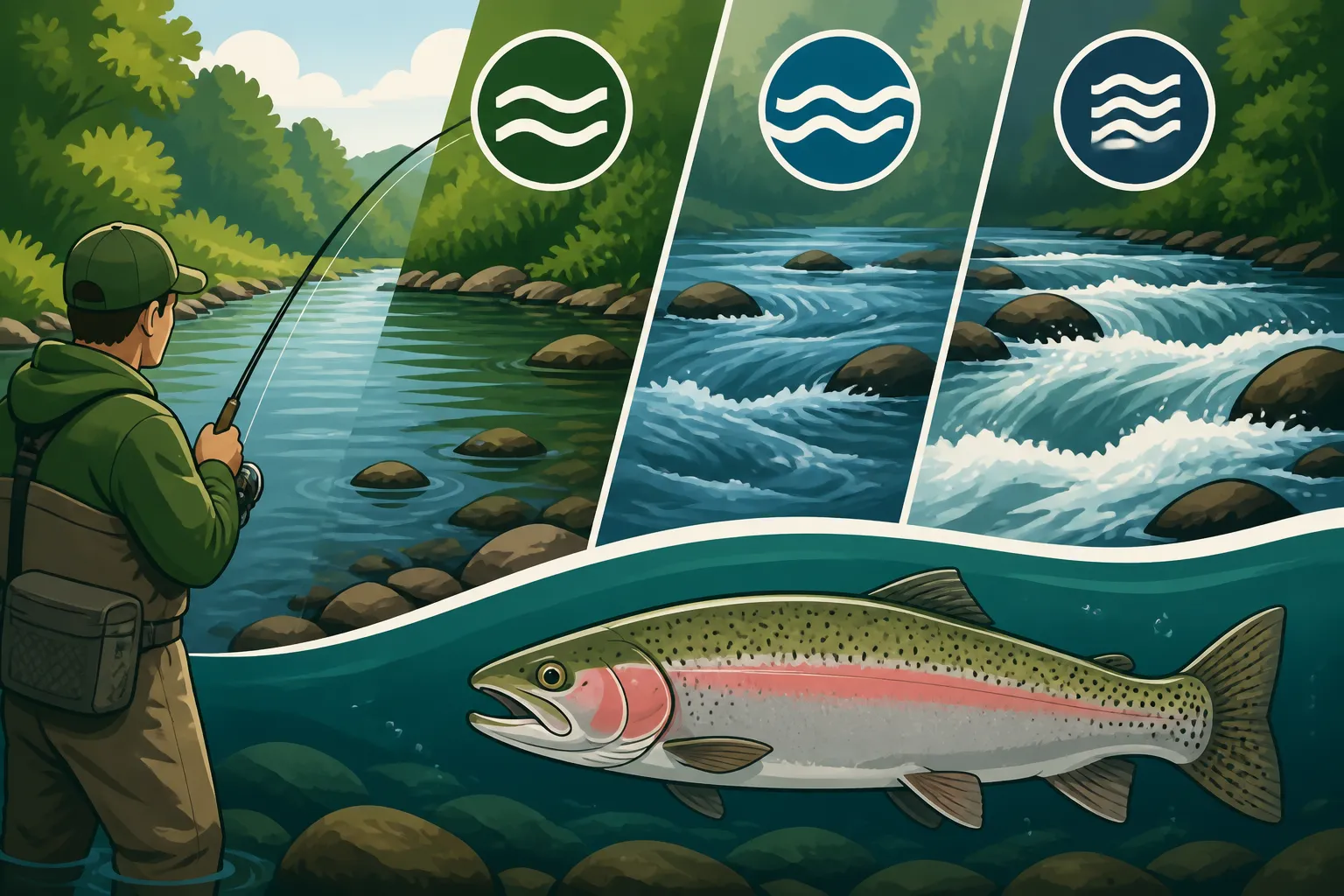
For the Rocky River, the ideal flow rate at the Rockport gauge typically falls into a range of 200 to 400 CFS. This is often considered the "sweet spot" by veteran anglers, and for good reason. Within this range, the river has enough water to:
- Draw fish upstream: Higher flows, even within this ideal range, can encourage fresh steelhead from Lake Erie to migrate further into the river system.
- Provide ample holding water: Fish can comfortably spread out into various runs, riffles, and pools, rather than being confined to only the deepest pockets.
- Offer good water clarity: While there might be a slight stain to the water, which is actually beneficial as it provides cover for the fish and makes them less wary, it generally isn't muddy enough to hinder their ability to see baits and lures.
- Allow for effective drift presentations: The current is strong enough to carry your bait naturally but not so overpowering that you can't control your drift or maintain bottom contact.
When the river is in this ideal flow, steelhead tend to be more active and willing to strike. They feel secure with the water levels and are actively feeding or moving. It’s the kind of day where your chances of hooking into a powerful chrome torpedo significantly increase. You'll often find a diverse range of fishing spots accessible, from the deeper stretches around the Rocky River Steelhead Fishing Access Points to the faster water further upstream.
Adjusting Techniques for Different Ideal Flows
Even within that ideal 200-400 CFS window, subtle adjustments to your technique can make a world of difference.
- On the higher end (300-400 CFS): The water will be moving a bit faster and might have a slight brownish tint. This often means steelhead are holding in faster water seams, behind cover, or in larger, deeper pools where they can expend less energy. You might need to use slightly heavier weights or split shot to get your bait down effectively. Brighter colored baits or beads can also be more visible in slightly stained water. Steelhead in these conditions are often more aggressive, so don't be afraid to try slightly larger presentations or more erratic retrieves if you're using hardware. When I'm gearing up for these conditions, I might even browse Amazon for some heavier tungsten weights or brighter steelhead beads to add to my tackle box.
- On the lower end (200-300 CFS): The water will likely be clearer, and the current a bit slower. This calls for a more stealthy and finessed approach. Lighter fluorocarbon leaders, smaller baits or jigs, and a quiet approach to the riverbank become paramount. Fish will be more prone to spooking, so long, drag-free drifts are critical. Often, natural egg patterns, small nymphs, or subtle jigs are key. This is where patience really pays off, focusing on precise presentations to fish holding in obvious seams or behind current breaks. For detailed guidance, checking out articles on Ohio Steelhead Fishing Techniques can provide invaluable insights for these varying conditions.
Recognizing Unfishable High or Low Water Conditions
While we all dream of those perfect "sweet spot" days, the reality is that the Rocky River often swings outside of that ideal window. Knowing when to stay home, or at least shift your expectations and tactics dramatically, is crucial for both safety and fishing success.
When the River is Too High or Muddy
This is perhaps the most common frustration for anglers. You check the forecast, see a lot of rain, and wonder, "Will it be fishable?" Generally, when the Rocky River at the Rockport gauge pushes above 500-600 CFS, conditions start to become very challenging. Once it hits 800-1000 CFS or higher, it’s usually considered unfishable and unsafe.
Here's why:
- Safety Hazards: Rapidly flowing water can sweep you off your feet. Submerged logs, rocks, and debris become invisible hazards. Wading becomes dangerous, if not impossible. Even fishing from the bank can be risky near the eroding edges. This is definitely a time when reviewing What Flow Is Too High to Fish Ohio Steelhead Rivers? becomes critical for safety.
- Poor Water Clarity: Heavy runoff carries a lot of sediment, turning the river into a murky, brown mess often described as "chocolate milk." Steelhead, which are primarily sight feeders, struggle to see your offerings in such conditions. They'll also often move into very slack water or tributaries to escape the main current, making them harder to locate.
- Fish Behavior: In extremely high flows, steelhead will typically tuck into the slowest available water – often tight to the banks, in eddies, or even temporarily holding in small, clear tributaries if available. They conserve energy and are much less likely to feed aggressively.
If you arrive to find these conditions, it's often best to wait. The river usually needs a few days to drop and clear after a significant rain event. That falling and clearing water, once it gets back into the fishable range, can be absolutely dynamite. It's often the Best Time to Fish for Steelhead After Rain.
When the River is Too Low and Clear
On the other end of the spectrum, extended dry periods can bring the Rocky River down to unfishably low levels, typically below 100 CFS at the Rockport gauge. While low and clear water might sound appealing for sight fishing, it presents its own unique set of challenges.
- Spooky Fish: In very clear, low water, steelhead become incredibly wary. They can easily see you, your line, and any unnatural movement. Shadows on the water or vibrations from heavy footsteps can send them scattering. You'll likely need to fish with extremely light fluorocarbon leaders, make long casts, and keep a low profile.
- Limited Holding Water: With less water, many runs become too shallow, forcing fish into the deepest pools and pockets. These areas can become crowded with fish, but also mean intense competition and highly pressured steelhead. Accessing these spots without spooking fish can be a real puzzle.
- Exposed Obstacles: Low water reveals many snags and rocks that are normally covered, increasing your chances of getting hung up. Wading can also be difficult due to slippery, exposed rocks.
When the river is this low, traditional drift fishing can be tough. Your best bet might be to focus on dawn or dusk, when light levels are low and fish might feel more comfortable moving. Small, subtle baits or flies are the way to go. If conditions persist, it might be time to consider other fishing opportunities or simply wait for some much-needed rain to refresh the system. Understanding How to Tell If a River Is Too Muddy for Steelhead often comes easily, but knowing when "too clear" is also a problem takes experience.
Practical Tips for Monitoring River Flow Before Your Trip
So, how do you stay ahead of the curve and ensure you're hitting the Rocky River when conditions are prime? It boils down to consistent monitoring and understanding the trends.
Utilizing Online Resources and Apps
The internet has revolutionized river fishing, giving us real-time data at our fingertips. Your go-to resource should always be the USGS National Water Information System website. Just search for "USGS Rocky River Rockport" and you'll find the specific gauge. This site offers:
- Current CFS readings: The most up-to-date flow.
- Hydrographs: Graphs showing the river's flow over the last few hours, days, or even months. This is invaluable for seeing the trend (rising, falling, or steady).
- Gauge height: An alternative measurement to CFS, useful for visualizing depth changes, though CFS is generally more useful for assessing fishability.
Beyond the USGS site, many popular fishing apps like Fishbrain, RiverApp, or local Ohio fishing forums and websites often integrate USGS data, making it super convenient to check on the go. Some even offer historical data comparisons or notification features when the river hits certain levels. I've often scrolled through new gear on Amazon while simultaneously checking river levels on my phone – it’s just part of the modern angling experience!
Interpreting Trends and Local Conditions
Looking at the raw CFS number is a good start, but it’s the trend that truly tells the story.
- Rising Water: If the river is rising rapidly after a rain, even if the current CFS is in a fishable range, it's a warning sign. The water will likely be dirty and rising, making fishing tough as fish move to cover.
- Falling and Clearing Water: This is often the golden period! After a high-water event, as the river begins to drop and clear back into that 200-400 CFS range, steelhead often become very aggressive. They've had a chance to rest, fresh fish have moved in, and the dropping water signals a return to feeding. This is often When the Rocky River Steelhead Run Peaks!
- Steady Water: A stable flow in the ideal range usually means consistent fishing. The fish are settled, and you can focus on working your spots thoroughly.
Always cross-reference the flow data with recent local precipitation. Did it rain heavily right over the Rocky River watershed, or was the rain mostly downstream? Local weather radar apps can help you understand the impact. Many local bait shops or online fishing reports also offer invaluable "boots on the ground" perspectives on water clarity, color, and fish activity that the gauges don't capture. For instance, sometimes the gauge might show a good flow, but local reports indicate the water is still very dirty, meaning it just hasn't cleared up yet.
Remember, dressing for the weather and river conditions is also key. Consider what you might need, like proper wading boots or even full waders (checking for options on Amazon is always a good idea) as discussed in Do You Need Waders for Ohio Steelhead Fishing?. Being prepared means you can focus on fishing, not fighting the elements.
Rocky River Flow Guide
To make things a bit clearer, here's a general guide for the Rocky River's flow, based on the USGS Rockport gauge. Keep in mind these are guidelines, and local conditions can always vary slightly!
| Rocky River Flow (USGS Rockport Gauge – CFS) | Typical Fishing Conditions | Steelhead Behavior | Recommended Approach |
|---|---|---|---|
| Below 100 | Very Low, Crystal Clear | Spooky, concentrated in deep pools | Finesse, long leaders, small natural baits, extreme stealth, focus on dawn/dusk |
| 100 – 200 | Low to Moderate, Clear | Active in deeper runs and pockets | Stealth, light tackle, natural baits/beads, careful wading |
| 200 – 400 (The Sweet Spot) | Moderate Flow, Good Clarity | Very Active, Spread Out, Migrating | Drifting beads/jigs, small spoons/crankbaits, diverse techniques |
| 400 – 600 | Moderate to High, Slight Stain | Holds tight to current breaks, still feeding | Heavier weights, brighter colors, focus on slower seams and eddies |
| 600 – 800 | High, Off-Color/Muddy | Seeks refuge, difficult to see bait | Very challenging, focus on extreme slack water or wait |
| Above 800 | Very High, Muddy, Unsafe | Unfishable, safety risk | Avoid the river, wait for levels to drop significantly |
Knowing when to go and when to wait can make all the difference between a memorable day of catching powerful steelhead and a frustrating exercise in casting into unfishable water. Stay safe, stay informed, and tight lines!
Disclaimer
Please remember that fishing regulations, conditions, and best practices can change. Always consult the latest official Ohio Department of Natural Resources (ODNR) regulations before heading out. Safety should always be your top priority when on or near the water.